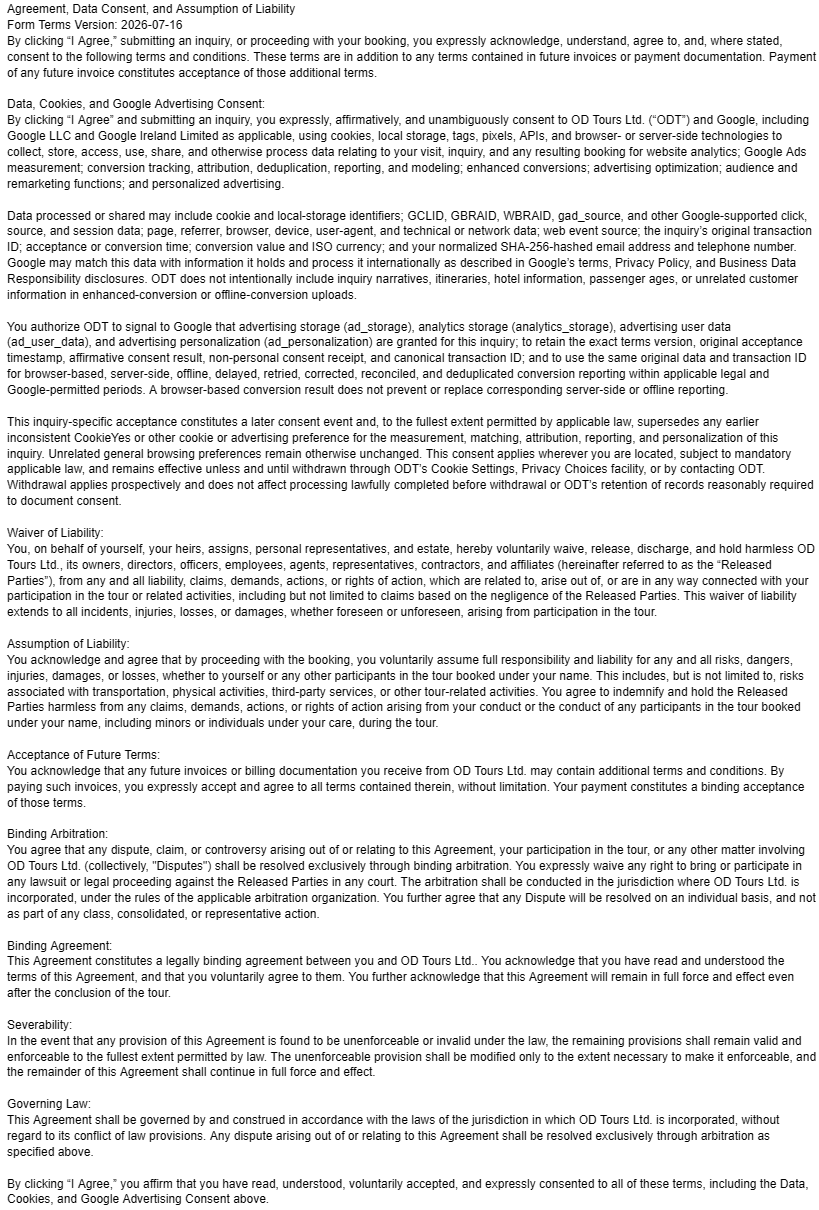
Córdoba as a Lunch Stop Between Andalusia Cities: When the Meal Makes or Breaks the Day
Updated
Verdict: Córdoba can be an excellent lunch stop between Andalusia cities only when the meal is planned as the hinge of the transfer, not as a reward after an overstuffed sightseeing sprint. It works because Córdoba station is close enough to the historic core for a clean move into the Judería and Mezquita zone, but station-to-Mezquita timing still consumes attention once luggage, heat, entry timing, and a proper meal are in play. The clearest exception is any day with a fragile evening arrival: if you need to reach Granada for an Alhambra-linked night, arrive in Seville composed for a celebration dinner, or recover after a long rail leg, shorten Córdoba to the Mezquita plus a light bite or move lunch to another day. In Córdoba, the old town is compact, but midday is not elastic.
The local mistake is assuming that a restaurant near the Mezquita automatically solves the transfer. It does not. The counterintuitive rule is that the better-known dining address is not automatically the better lunch-stop choice; a calmer room near a clean pickup can beat a more ambitious table if it keeps the Mezquita before the meal and the onward transfer unhurried. The real hinge is whether the arrival from Córdoba station lands you at the old-town edge before the day becomes hot, whether the Mezquita comes before appetite and conversation start to slow the group, and whether the onward departure gives lunch enough room to feel like part of the journey rather than a hostage negotiation with the clock. That is why this guide is not a restaurant list. It is a route verdict for travelers deciding whether lunch in Córdoba belongs between Seville, Granada, Málaga, the coast, or a wider Spain itinerary.
The lunch-stop ladder: which transfer earns the meal
The best Córdoba lunch stop is the one that leaves the Mezquita legible, the meal unhurried, and the next city still pleasant on arrival. Rank the choice by route tolerance, not by how tempting the restaurant sounds.
Top rung: Seville-linked days with a flexible next stop. Córdoba works best when Seville is one end of the day and your onward arrival is not pinned to a hard evening commitment. The station and road approaches give you a manageable city insert, and the historic core is compact enough that a guided Mezquita visit, a short Judería thread, and a focused lunch can feel complete. This is the version to choose for couples, food-and-wine travelers, and small groups who would rather have one excellent Andalusian meal than a scattered snack between trains.
Second rung: Granada and Seville in the same transfer arc, but only with a generous buffer. A Córdoba lunch stop can work between Granada and Seville when the day is driver-led or when rail timings align unusually well. It stops working when Córdoba is treated as a casual detour. Granada already asks a lot of the body and the schedule; adding Córdoba means the meal has to be the point, not a side benefit.
Third rung: Málaga, the coast, or a resort-to-city move. Córdoba can be rewarding from Málaga or the Costa del Sol when the travelers actively want the Mezquita and a proper Córdoba lunch. It is not the natural solution for a simple coastal transfer. If the plan is mostly “we have to eat somewhere,” keep lunch closer to the route and save Córdoba for a more intentional day.
Useful adjacent case: Madrid to Seville or Seville to Madrid. This is not an Andalusia-to-Andalusia move, but it often appears in the same itinerary conversation because Córdoba sits naturally on the Madrid-Seville rail line. The city can be a very strong lunch stop on that axis, especially if luggage handling and Mezquita entry are already solved. For the rail-specific version of that problem, see Córdoba with luggage.
Bottom rung: any route with a fixed fine-dining lunch, a late onward arrival, and no recovery room. This is the wrong fit. The meal will be too short, the Mezquita will feel processed, and the next city will inherit the fatigue. Córdoba should not become the reason a Granada evening, Seville celebration, or family arrival falls apart.
The firm call is this: Córdoba is a better lunch stop than a snack stop. If you only have time for a sandwich and a rushed pass through the Judería, the city is being used poorly. Either give Córdoba a real midday or make the stop smaller and more honest.
Why Córdoba can work in real city conditions
Córdoba works as a lunch stop because its best transfer geography is unusually concentrated. Córdoba station, the old-town edge, the Judería, and the Mezquita sit close enough to make a planned half-day coherent, while still being separate enough that poor sequencing creates visible waste.
On paper, the station-to-Mezquita timing looks easy. In real travel conditions, it is the hinge that controls how much lunch can do. In calm conditions, station-to-Mezquita timing is often a short taxi or chauffeured ride of about 10–15 minutes to a practical old-town edge, plus a few minutes on foot depending on the drop point, but the usable planning block is longer once luggage, pickup, street access, heat, and ticket entry are included. You need the move from platform or vehicle to car, the ride toward the historic center, the drop at a practical edge rather than directly inside every narrow street, the walk through the old-town fabric, and the mental reset from transit mode into city mode. A guide or driver cannot remove the geography, but they can keep the sequence from leaking minutes at every handoff.
The best arrival shape is not “station, wander, lunch, maybe Mezquita.” It is station or driver drop, direct transfer toward the Mezquita side of the Judería, the monument while attention is still crisp, then lunch close enough to avoid a second cross-town transfer. The Judería is valuable here not as a checklist neighborhood but as connective tissue. A short route through Puerta de Almodóvar, the lanes around the old Jewish Quarter, or the approach near Calle Torrijos can give the meal context without turning the day into a walking tour that empties everyone before the first course.
This is where Orange Donut Tours’ private planning has a natural role. If the travelers want the meal to carry the day, the guide-led sequence can decide what belongs before lunch, what belongs after lunch, and what should be left untouched. A food-focused extension can be shaped through Córdoba tapas and wine private tour, while a fully custom transfer day belongs in tailor-made Córdoba private tours. If your Córdoba stop is tied to an arrival, departure, or chauffeur handoff, the same planning logic can also support Córdoba airport transfer tours. The point is not to add more. It is to stop the day from scattering into ticket checks, luggage questions, restaurant uncertainty, and an onward departure that suddenly feels too close.
The counterintuitive correction is that the most atmospheric base is not always the best transfer base. Staying, eating, or lingering deep in the Judería can be lovely on an overnight, but for a moving day the prettiest lane can become a bottleneck if it adds awkward vehicle access, extra walking in heat, or a second pass through the same crowded approach. A lunch stop should use the old town intelligently, not bury the schedule inside it.
The Mezquita and lunch compete for the same prime hour
The Mezquita and lunch both want your best midday attention, so the day fails when you pretend one can simply follow the other without tradeoffs. The question is not whether the Mezquita is worth seeing; it is whether you have protected enough time for it before the meal changes the rhythm of the group.
For first-time visitors, the Mezquita is the anchor. The columns, double arches, mihrab, later cathedral insertion, and exterior rhythm need orientation, not just presence. This is especially true on a transfer day because travelers arrive with split attention: one eye on the monument, one eye on bags, train times, the driver, the restaurant, and the next hotel. Before committing to a ticket window or visit order, use the official Mosque-Cathedral site (https://mezquita-catedraldecordoba.es/en/) for current visitor information rather than relying on inherited assumptions from an old itinerary.
Lunch competes with the Mezquita in three ways. First, a sit-down meal creates a psychological finish line. Once the group has ordered, relaxed, and opened a bottle of local wine, appetite gives way to comfort and conversation; returning to dense architectural interpretation afterward is harder. Second, lunch pulls the day into the hottest and slowest part of Córdoba’s rhythm. Even outside peak summer, the difference between a clean monument-first morning and a post-lunch push through stone lanes is obvious in how people move. Third, a good meal creates its own pace. Rushing the courses is not only unpleasant; it removes the very reason Córdoba was chosen as the stop.
The cleaner sequence is usually Mezquita first, then lunch, then either a gentle exit or one narrow after-lunch add-on. That add-on might be a short look toward the Roman Bridge and Puerta del Puente, a restrained Judería passage, or a shaded return toward the pickup point. It should not be Medina Azahara, Palacio de Viana, the Alcázar, and a shopping detour. The cut-first rule is simple: when the day is getting full, cut the extra monument before you compress the Mezquita or turn lunch into a timed errand.
There are exceptions. If the only available Mezquita entry window or private guide timing lands after lunch, choose a lighter meal and keep wine modest. If the group is traveling with older parents, very young children, or travelers who fade sharply in heat, a shorter guided monument visit followed by an earlier lunch can be kinder than holding everyone for an ideal sequence that their bodies will not enjoy. What should not happen is the false compromise: a heavy lunch, a late monument visit, and a long onward transfer, all presented as if comfort will somehow survive.
What kind of lunch fits a transfer day?
The right lunch is the one that matches the onward route. Córdoba has enough culinary seriousness to tempt an ambitious meal, but a transfer day rewards precision more than indulgence.
- A focused local lunch is the safest winner. This is the meal for travelers who want Córdoba to feel specific without turning the day into a restaurant pilgrimage. Think of it as a seated lunch close to the historic core, ordered with restraint, built around local flavors rather than a long parade of courses. It gives couples and small groups the pleasure of place while leaving enough alertness for departure. For restaurant logistics, check direct sources such as Terra Olea’s official site (https://terraolearestaurante.com/) or ReComiendo’s official site (https://www.recomiendopower.com/) rather than relying on copied opening notes from an old plan.
- A tapas-and-wine lunch works when food is the theme. This suits travelers who would rather taste, compare, and understand Córdoba through dishes and Montilla-Moriles context than sit through a formal meal. It is particularly strong after the Mezquita because the conversation has somewhere to go: from caliphal Córdoba and the Judería into the way the city eats today.
- A destination tasting menu is usually the wrong lunch-stop choice. Córdoba’s serious dining scene matters, and the MICHELIN Guide entry for Noor (https://guide.michelin.com/gb/en/andalucia/cordoba/restaurant/noor) is a useful proof point for travelers who care about culinary ambition. But a restaurant of that level belongs in an overnight or a day built around the meal, not squeezed between a station arrival, the Mezquita, luggage, and a late transfer.
- A snack stop is useful only when you admit it is not a Córdoba lunch day. If the schedule is tight, a light bite near the old town may be the correct choice. It is not a failure. The failure is dressing it up as a full Córdoba experience and then wondering why the city felt rushed.
This is where premium judgment matters more than premium spend. Paying for a better table, a better car, or a private guide can improve comfort, privacy, interpretation, and handoffs. Premium spend does not help if the route is too tight, the Mezquita is placed after a heavy meal, the restaurant is too far from a practical pickup edge, or the onward transfer leaves no recovery room. More money does not fix poor sequencing; the expensive version of a bad sequence is still a bad sequence.
For celebration travelers, the lunch choice should also respect the evening. If Córdoba is between two hotel stays, a generous lunch can be the emotional center of the day. If the evening already has a tasting menu, flamenco, family gathering, or first night in Granada, lunch should be lighter and earlier. The goal is not to make Córdoba compete with the night; it is to keep the entire day from peaking too soon.
Route calls: Seville, Granada, Málaga, and the coast
The route decides whether Córdoba lunch feels elegant or forced. Use the city as a meaningful hinge only when the onward leg can absorb a real meal.
Seville to Córdoba to somewhere else
Seville-linked routes are the strongest because the city pair is naturally close enough for Córdoba to feel like a cultural and culinary pause rather than a detour invented by a map. If you are leaving Seville in the morning, Córdoba can receive the best part of the day: the Mezquita before the heaviest heat, a short Judería context walk, and lunch before departure. This is the strongest version for travelers who want the meal to be memorable without sacrificing the monument.
The trap is adding too much because the first transfer seems easy. A Seville start does not mean you should add the Alcázar, Viana, Roman Bridge, a craft stop, a long lunch, and a late onward route. If the next city is Granada, the arrival still matters. If the next city is Madrid, the train or driver still sets a firm line. Córdoba’s compactness is an advantage only when it keeps the plan concentrated.
Granada to Córdoba to Seville
Granada-to-Córdoba-to-Seville can work, but it should be treated as a designed travel day rather than a simple transfer. Granada often leaves travelers with hill fatigue, Alhambra intensity, or an early start. Bringing that body into Córdoba and expecting a dense Mezquita visit plus a celebratory lunch requires honesty about stamina.
This route is strongest with a private driver, an earlier departure, and an evening in Seville that can begin quietly. It is weaker by improvised rail if connection times force you to choose between meal comfort and monument quality. If Granada has already been intense, make Córdoba the calm middle of the day: Mezquita, lunch, depart. Do not add a second museum or a Roman Bridge walk just because it is famous. If the broader decision is whether Córdoba belongs between those two cities at all, the more general stop-or-sleep framework is covered in Córdoba between Seville and Granada.
Málaga, the Costa del Sol, and resort-to-city moves
Málaga and coastal transfers are narrower cases. Córdoba is rewarding from the coast when the travelers specifically want the Mezquita and a Córdoba meal, not when they merely need a lunch break. The more beach or resort energy the morning carries, the more abrupt Córdoba’s dense historical core can feel if the stop is too short.
The best coastal version is driver-led and clear-eyed: leave early, enter Córdoba as the day’s cultural pivot, eat a focused lunch, then continue. The weak version is late departure, no ticket plan, a heavy lunch, and a long drive afterward. Families and older travelers feel this most sharply because the vehicle time, heat, and old-town walking stack together. If the day starts late from the coast, skip the full lunch-stop idea and plan a simpler meal closer to the route.
Madrid-Seville with Córdoba in the middle
Madrid-Seville is not an Andalusia-only route, but it is the most common reason travelers discover Córdoba’s lunch-stop potential. The rail geography is favorable, and the city can interrupt a longer Spain itinerary beautifully. The planning problem is luggage and timing, not whether Córdoba is interesting enough.
On this axis, the meal should still follow the same rule: Mezquita first if possible, lunch second, no excessive add-ons. A rail stop can feel polished when someone has solved bags, ticket timing, and the transfer from Córdoba station to the old-town edge. It can feel oddly stressful when the group spends the first hour negotiating storage, taxis, heat, and where to eat.
What Córdoba does to the body
Córdoba is not physically difficult in the same way as hillier Andalusian cities, but it can still drain a transfer day quickly. The challenge is heat load, stone underfoot, short exposed stretches, and the repeated stop-start pattern created by station arrival, vehicle drop, ticket entry, old-town walking, lunch, and departure.
The city’s compact center can mislead planners. From the station side, the move toward Paseo de la Victoria and the Puerta de Almodóvar edge feels simple, but every small transition asks the group to change mode: train to taxi, luggage to walking, street glare to monument, interpretation to lunch, lunch back to movement. In warm months, the open approach and reflective stone can make a short walk feel longer than its map distance. In family groups, one child who needs water or shade can break the timing. With older parents, the issue is less dramatic stair-climbing than accumulated standing, slow paving, and the need for a seated pause at the right moment.
That is why the best Córdoba lunch stop does not chase every nearby sight. It protects the few transitions that matter. A private guide near the Mezquita can reduce interpretive fatigue because the group does not have to read, guess, and reorient at every point. A driver can reduce uncertainty around pickup edges. A well-chosen lunch can turn the hardest part of the day into a seated recovery instead of a delayed reward.
The body consequence should shape the cuts. If someone is moving slowly, skip the Roman Bridge photo rather than rushing the Mezquita. If heat is climbing, skip deeper Judería wandering rather than delaying lunch. If the onward route is long, skip dessert or coffee lingering rather than turning the next city into a tired arrival. Córdoba is generous when the day is concentrated and unforgiving when every “nearby” thing becomes mandatory.
What the meal does to the mood of the day
A good Córdoba lunch stop makes the transfer feel shorter because the day has a center. A bad one makes the next city inherit the sense that everyone has been managed, hurried, and slightly overpromised.
The mood change is easy to underestimate. Before lunch, travelers tolerate logistics because there is a visible reward ahead: the Mezquita, the old town, the table. After lunch, the group’s patience changes. People become less willing to stand in unclear lines, retrace lanes, or debate whether one more stop is worth it. That is not laziness; it is the natural effect of a good meal on a moving day. The itinerary should respect it.
This matters most for celebrations and multi-generational travel. A birthday lunch in Córdoba can be a superb midpoint between Andalusian stays if the afternoon is allowed to taper. A family transfer can feel gracious if the children know the monument comes first and lunch is not endlessly postponed. Couples can enjoy the city more when the meal is not shadowed by a frantic check of the next train. The wrong mood is not simply fatigue. It is the feeling that Córdoba became an obstacle between two hotels rather than the reason the transfer day was memorable.
When the day has to thread luggage, monument timing, a meal, and onward transport, the value is in fewer unforced decisions. For a guide-led Córdoba stop shaped around the actual route rather than a generic checklist, Inquire now.
When to shorten, skip, or move Córdoba lunch to another day
Shorten the Córdoba lunch stop when the route has a hard evening consequence. If the next city requires a precise arrival, if your group has already had a strenuous morning, or if the Mezquita entry cannot be placed cleanly, make the stop smaller. The best shortened version is Mezquita, one contained Judería thread, and a light lunch or snack before departure.
Skip the lunch stop when Córdoba is being used to compensate for poor transfer planning. Lunch cannot absorb a late start, vague luggage arrangements, no ticket plan, and an ambitious onward arrival. In that case, a higher-end restaurant does not save the day; it simply becomes another commitment you are late for. Put the meal in Seville, Granada, or Málaga instead, and give Córdoba a cleaner visit another time.
Move Córdoba to another day when the city deserves more than a meal can hold. This is especially true for travelers interested in Medina Azahara, patios, artisan stops, or a deeper old-town day beyond the Mezquita. Those are not bad ideas; they are bad lunch-stop ideas. If the plan is expanding in that direction, the answer is not a longer lunch stop. The answer is an overnight or a dedicated private day.
For travelers who want the monument portion handled with maximum clarity, Mezquita-Catedral skip-the-line private tour is the cleanest anchor. For travelers whose real issue is a custom handoff between arrival, meal, guide, and departure, the more useful conversation is a tailored route rather than another list of restaurants.
How to build the cleanest Córdoba lunch stop
The cleanest Córdoba lunch stop has four decisions made before the day begins: route, luggage, Mezquita order, and lunch weight. Everything else is optional.
- Decide whether Córdoba is the point or the pause. If Córdoba is the point, give it the best hours and eat properly. If Córdoba is only a pause, choose a lighter bite and stop pretending the day can hold a full city visit.
- Keep the transfer edge practical. The most elegant old-town address is not always the easiest moving-day address. Vehicle access, walking load, and pickup clarity matter more than a charming lane if you are traveling with bags or a mixed-age group.
- Put the Mezquita before the meal unless there is a strong reason not to. This keeps attention high and allows lunch to become the release valve rather than the interruption.
- Let lunch decide the afternoon. A light lunch can support a small after-meal walk. A serious lunch should lead to a simple departure. A destination lunch should usually replace further sightseeing, not sit beside it.
- Name the first cut before the day starts. The first cut is usually a secondary sight, not the Mezquita and not the meal. If the plan depends on everything going perfectly, the plan is already too brittle.
One useful test is to imagine the day without the Córdoba meal. If the remaining plan still looks crowded, lunch will not improve it. If the plan looks spare, focused, and slightly underfilled, lunch may be exactly what makes the transfer feel designed. This is the difference between a meal that makes the day and a meal that exposes the day’s weak planning.
FAQ
Is Córdoba a good lunch stop between Seville and Granada?
Yes, Córdoba can be a good lunch stop between Seville and Granada when the day has a generous buffer, ideally with private transport or well-aligned rail timing. It is not a good idea when you need a precise evening arrival in Granada or Seville.
Should we visit the Mezquita before or after lunch?
Visit the Mezquita before lunch in most cases. The monument rewards clear attention, and a proper lunch naturally slows the group afterward. If the only workable entry or guide timing is after lunch, keep the meal lighter.
How much time should we allow for Córdoba station to Mezquita and lunch?
Allow more than the ride itself. Córdoba station is close enough to the old town for a planned stop, but station-to-Mezquita timing includes luggage, vehicle pickup, the old-town edge, walking, entry timing, and the meal.
Can Noor work as a transfer-day lunch?
Noor is better treated as a destination dining choice for an overnight or a day built around the restaurant. For a transfer-day lunch, a shorter local meal or tapas-and-wine plan usually fits Córdoba better.
What should we cut first if the Córdoba stop is too full?
Cut secondary add-ons first: deeper Judería wandering, a Roman Bridge photo, shopping, or an extra monument. Do not solve an overpacked day by rushing the Mezquita or turning lunch into a hurried obligation.
Is a private guide worth it for a Córdoba lunch stop?
A private guide is worth it when the day includes the Mezquita, route timing, luggage questions, and a meal that needs to land well. It is less necessary if you are only stopping for a simple bite without sightseeing.
Which route suits a Córdoba lunch stop best?
Seville-linked routes are usually the strongest, especially when the onward arrival is flexible. Granada and coastal routes can work, but they need more discipline because the detour, drive time, and body fatigue are less forgiving.
When should we move Córdoba lunch to another day?
Move it to another day when you want Medina Azahara, patios, artisan stops, or a formal destination meal in addition to the Mezquita. Those plans deserve an overnight or dedicated Córdoba day, not a squeezed transfer stop.
If you’re interested in any private tours of Cordoba, please reach out to us.


 So if you are looking for the absolute best in Cordoba & surroundings with authentic local fully-licensed native guides whose English you can actually understand and with an exclusive and amazingly fun itinerary