When State Ceremonies Change Madrid’s Royal Palace Visit: Closures, Substitutions and a Plan That Still Holds

Updated
The difficult version of a Royal Palace day does not begin with rain or a late start. It begins when a carefully timed group reaches the palace quarter—or is already on the way—and learns that an official act has changed public access. The Palace was meant to establish the political and ceremonial grammar of Madrid before a later museum, a reserved lunch, a Teatro Real performance or another fixed evening commitment. Suddenly the anchor is uncertain, while the rest of the day is still very real.
The wrong response is to treat every nearby cultural institution as interchangeable. A state-room visit, a collection gallery and an exterior walk answer different historical questions. Moving the group to the nearest available building may fill time, yet it can also dissolve the royal narrative that justified the day. The useful response is more disciplined: verify what the official notice actually affects, preserve the parts of the story that remain available, and change the sequence before one closure causes a cascade of missed admissions and rushed onward plans.
This guide is for first-time private groups whose Palace day already carries commitments. It does not predict ceremonies or closures. It explains how to read the operational signal, how to use the Royal Collections Gallery as a genuine contextual substitute when it is open, how to decide whether the Palace should move later or disappear from the day, and how much of the surrounding royal quarter still makes sense when security or mobility measures change the approach.
The ceremony is a trigger to verify, not a closure forecast
The Royal Palace of Madrid is both a major public monument and a working setting for official and institutional acts. That dual role is the source of the planning problem. Patrimonio Nacional’s official Royal Palace ticket and visitor page separates fixed calendar closures from the possibility of additional closures because of official acts. It also publishes seasonal hours, the final-admission rule and an estimated visit duration. Those details make the live listing the operational authority; an itinerary written months earlier is only a planning framework.
Patrimonio Nacional’s official overview of institutional acts identifies ceremonies associated with the Palace, including state banquets for visiting heads of state, presentations of credentials by ambassadors, military audiences, the Solemn Changing of the Guard, diplomatic-corps receptions and the Pascua Militar. The important distinction is that this list describes the Palace’s institutional function. It is not, by itself, a visitor-closure calendar. A ceremony’s existence should prompt verification; it should never be converted into an unsupported prediction that public rooms will close on a particular date or for a particular number of hours.
For planning purposes, read every operational notice through four questions. First, what is the scope: the entire Palace, a reduced visiting window, or an access condition that is still being clarified? Second, what is the time boundary: all day, a morning period, an afternoon period, or an unspecified interval? Third, what happens outside the building: are normal approaches, vehicle movements or pedestrian gathering points affected? Fourth, what happens to the admission already held: is there a stated alternative, or must the group make a separate decision under the purchase terms?
These questions matter because “the Palace is affected” is too imprecise to redesign a day. A full public closure removes the state-room experience. A late opening may make a morning Gallery-first sequence viable. An early closing may leave a morning Palace visit intact but compress every transition after it. A security perimeter may make the ticket usable while invalidating the planned drop-off, meeting point or Plaza de Oriente introduction. The official notice, not the ceremonial label, determines which of these situations exists.
Dates that deserve closer attention
There are two kinds of dates to treat differently. The first kind is published calendar closure: a date the official Palace listing already identifies as unavailable or restricted. The second kind is an additional official-act closure that can appear when the institutional calendar requires it. The first should be caught during initial booking. The second is the reason the day needs a recheck protocol even after admissions have been secured.
A named state visit, major diplomatic ceremony or highly visible institutional occasion increases the reason to review official sources, but it does not tell a traveler exactly which rooms, streets or hours will be affected. Large civic operations can extend well beyond a monument entrance. As a dated example rather than a forecast, Madrid’s municipal account of the 6–9 June 2026 papal visit described a dedicated mobility operation covering road closures, pedestrian and reduced-mobility movement, alternative routes, parking, Metro, Cercanías, intercity buses, EMT, taxis and bicimad. The official municipal notice shows how a major visit can become a city-movement issue as well as a building-access issue. It does not imply that every Palace ceremony will create measures on that scale.
The practical lesson is proportionality. A routine calendar check may be enough for an ordinary day. A named official occasion, a fresh Palace notice or visible security preparation around Calle de Bailén and the palace quarter calls for a second layer of verification: Palace status, Gallery status and municipal mobility information. The aim is not to anticipate every contingency. It is to detect the small number of conditions that materially alter the sequence.
What the Palace contributes—and what a substitute cannot reproduce
The Royal Palace gives a first-time visitor something that no collection display can fully duplicate: the experience of moving through a building designed to embody monarchy, court order, ceremonial hierarchy and state representation. Its value lies not only in individual works or decorated rooms, but in the relationship between architecture, procession, controlled access and political theater. A visitor understands royal power through scale, thresholds, spatial sequence and the contrast between public magnificence and restricted function.
That is why a closure is more than the loss of a famous interior. It removes one of the day’s principal forms of evidence. A painting can show a monarch, a tapestry can reveal court taste and a ceremonial object can express rank, but the Palace demonstrates how those elements were organized in space. When the building is unavailable, the revised day should state that loss plainly rather than pretending another museum is equivalent.
At the same time, the royal-history day has several other strands that can survive:
- Dynastic collecting. The Spanish Crown accumulated, commissioned, inherited and redistributed works across reigns and royal sites. The Royal Collections Gallery can make that process legible through objects rather than rooms.
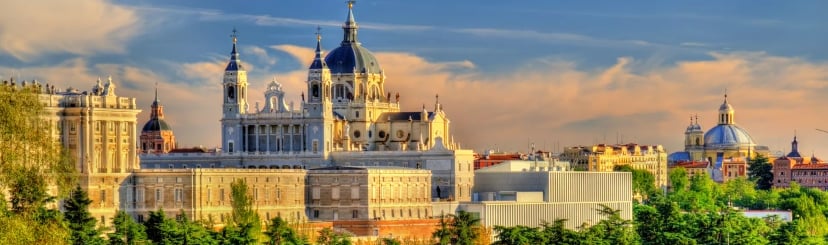
- Madrid’s ceremonial geography. Plaza de Oriente, the Palace façades, the Almudena Cathedral setting and the approach toward Madrid de los Austrias show how the royal complex sits within the capital.
- Court culture and representation. Portraiture, decorative arts and works made for royal environments can still explain how rulers presented lineage, piety, taste and authority.
- The passage from court collection to public institution. A later Prado visit can extend the story from royal patronage and possession to the public museum, provided the day has enough time and the museum admission remains workable.
The replacement strategy should therefore preserve strands, not simply fill hours. A Palace closure removes sovereign space. The revised plan should keep collecting, urban setting and representation, then decide whether a public-museum chapter belongs later. This is the central distinction between a coherent substitution and an improvised list of cultural buildings.
For a fuller version of the relationship among these institutions, the Palace–Gallery–Prado collecting arc explains how each site carries a different part of the story. That distinction becomes especially useful on a disrupted day, because it identifies what has been lost and what can still be reconstructed.
Why the Royal Collections Gallery is the most faithful contextual substitute
The Royal Collections Gallery is not a spare Palace interior. It is valuable precisely because it changes the medium of the royal story. Patrimonio Nacional’s official Gallery listing places it beside the Royal Palace and Almudena Cathedral, describes it as presenting masterpieces from the Spanish royal collections, publishes its own opening information and estimates roughly two hours for a visit. Its separate visitor listing is operationally important: Palace status and Gallery status must be checked independently rather than assumed to rise or fall together.
As a substitute, the Gallery works best when the guide or planner changes the question. The Palace asks, “How was monarchy staged in space?” The Gallery asks, “How did successive monarchs use collecting, commissioning and display to construct dynasty and authority?” That is not a consolation question. It is a substantial historical problem in its own right, and it can support a serious morning or afternoon when the state rooms are unavailable.
Build the visit around continuities, not a checklist of masterpieces
A failure-ready Gallery visit should be organized around a few continuities that connect back to the inaccessible Palace. The first is dynasty: how changes of ruling house altered taste, patronage and the visual language of power. The second is function: whether an object served devotion, representation, domestic display, diplomacy or ceremonial use. The third is movement across royal sites: collections were not created for a single modern building, and their histories often involve relocation, inheritance and changing institutional purpose.
This approach prevents the revised day from feeling like a downgraded “objects instead of rooms” compromise. It also gives first-time visitors a conceptual map. They can understand that the Palace and Gallery are complementary records: one preserves the spatial logic of monarchy, while the other gathers evidence of royal collecting across places and periods. The absence of the Palace remains visible, but the day still has an argument.
The Gallery’s adjacency to the Palace quarter is another advantage. It allows the group to retain the planned geography without making a premature cross-city transfer. An exterior reading of the Palace, Plaza de Oriente and the Almudena setting can precede or follow the Gallery, depending on security conditions and opening time. Even when interiors are inaccessible, the district can still introduce scale, orientation and the relationship between royal and civic Madrid.
Adjacency, however, should not be confused with zero transition time. Separate entrances, security procedures, group regrouping and the simple act of exiting one institution before entering another all consume minutes. If the Palace opens later in the day, the Gallery-first sequence needs a real interval between admissions. If the Palace remains closed, the Gallery should be allowed its own full interpretive span rather than squeezed into the gap created by the cancellation.
What the Gallery does not preserve
The Gallery cannot reproduce the bodily experience of the Palace’s state rooms, nor can an exterior explanation recreate interior procession. It may preserve dynastic and material context, but it does not show court hierarchy through room sequence in the same way. This distinction should be explicit in the revised plan, especially for travelers who chose Madrid partly for palace architecture or ceremonial interiors.
It also does not automatically solve the day’s ticketing problem. A Palace admission and a Gallery admission are separate operational matters. Availability for one should not be assumed from the status of the other, and a Palace closure should not be treated as automatic permission to enter the Gallery. Check the live Gallery listing, secure the appropriate admission where needed and verify group conditions before presenting it as the substitute.
Travelers deciding how much emphasis to place on objects, interiors or a later museum chapter can use this closer comparison of the Royal Collections Gallery, Palace and Prado. On a ceremony-affected day, that comparison becomes an operational tool: it clarifies which intellectual purpose each available institution can still serve.
Rebuild the sequence according to the notice you actually have
A strong contingency plan begins with a decision deadline. If the Palace status is clear the previous day, rebuild before the group departs. If a notice appears in the morning, decide before committing to a cross-city movement. If information remains ambiguous at the entrance, do not let the group wait indefinitely in the hope that access will resume. Establish a reasonable verification window, then commit to the best confirmed sequence.
The order of priorities is usually straightforward: preserve fixed evening commitments, preserve confirmed timed admissions that still contribute to the royal story, keep the group in one geographic zone while uncertainty is high, and use flexible exterior interpretation to absorb short changes. The Palace itself remains the preferred anchor when it is genuinely open and the revised time does not damage everything that follows.
Scenario one: the Palace is closed for the day, but the Gallery is open
This is the cleanest substitution scenario. Keep the group in the royal quarter, move the Gallery into the Palace’s interpretive role, and use the surrounding exterior setting to recover the spatial chapter that the closed interior would have supplied. A coherent sequence is Plaza de Oriente or another confirmed-access viewpoint, Palace exterior and institutional context, Royal Collections Gallery, then Madrid de los Austrias or a later museum only if time and energy remain.
The key is not to overcompensate. A two-hour Gallery visit, an exterior royal-quarter reading and a measured transition can already form a substantial half day. Adding the Prado simply because the Palace disappeared may create a denser schedule than the original. The Prado belongs when the group specifically wants to trace royal collecting into the public museum and when its admission and the evening commitment leave enough margin. Otherwise, the Austrias quarter can continue the court-and-capital story without another security line or cross-city transfer.
For travelers whose original Palace slot was meant to organize the neighborhood, the surrounding Palace-window sequence provides useful geography. On a closure day, use that geography selectively: keep the palace quarter and Austrias elements, but do not preserve a later Retiro movement merely because it appeared in the original plan.
Scenario two: the Palace opens later than planned
A later opening creates a more difficult choice because the Palace is still possible. The temptation is to wait nearby until access resumes. That can work only when the reopening time is official, the revised admission is valid and the later visit leaves enough space before the next fixed commitment. Without those conditions, waiting converts uncertainty into lost time.
The Gallery-first sequence is usually the most coherent response when its admission is available. It keeps the group beside the Palace, preserves royal context and allows a return to the state rooms if the reopening holds. The planner should calculate from the end, not the beginning: start with the latest acceptable departure for the evening commitment, subtract the Palace visit, exit and regrouping time, security and a realistic transfer. Whatever remains is the true Gallery window.
If that calculation produces a rushed Gallery and a rushed Palace, choose one. For first-time visitors who place highest value on the state rooms, retain the Palace and use the interval for exterior context rather than forcing a partial Gallery visit. For groups more interested in collecting, material culture and a calmer pace, commit to the Gallery and release the Palace from the day. The right choice depends on the group’s purpose, not on the emotional pull of “saving” every booking.
Scenario three: the Palace closes earlier than expected
An early closure often preserves the morning visit but changes its consequences. The public route may need to begin earlier, the admission window may narrow, or the group may have less flexibility on arrival. In this case, the plan should simplify everything before the Palace. Avoid a long breakfast meeting, a distant first stop or a scenic drive that assumes access will remain forgiving. Reach the quarter with a margin and treat the Palace as the immovable element.
After the visit, the Gallery can extend the royal narrative if its own hours and admission fit. Because the official Palace listing notes that final admission is before closing, a posted closing time should never be read as the time by which the group merely needs to reach the door. The public page’s current admission rule controls. Build the arrival around that rule, not around a casual estimate of walking time.
If the early Palace slot compresses lunch or the afternoon museum, remove one secondary component rather than shaving every component. A late arrival at the next timed institution can create another failure, while a deliberately shorter neighborhood walk remains flexible. The revised day should have one clear anchor, one supporting chapter and enough transition to reach the evening calmly.
Scenario four: the closure status remains uncertain
Uncertainty is operationally different from closure. It creates the risk that the group will hover around the Palace, postpone a confirmed alternative and lose both. The solution is a decision rule established in advance. For example: if official access is not confirmed by the point at which the group must leave for the Gallery or the Prado, proceed with the confirmed alternative. This is an editorial planning judgment, not an official rule, and the exact cutoff should reflect the day’s bookings.
While waiting for confirmation, stay within a small radius and use content that can end cleanly. Plaza de Oriente, the Palace exterior or a focused Austrias introduction can absorb a short interval when access is available. Do not begin a long walk whose endpoint pulls the group away from the quarter. Do not send a vehicle into a potentially restricted zone without checking the municipal mobility picture. Most importantly, do not promise that the square or a customary meeting point will remain open during an official operation.
Scenario five: both the Palace and Gallery are unavailable
This is the point at which the fallback must become thematic rather than adjacent. The strongest evergreen alternative is to preserve the court-to-public-collection narrative through Madrid de los Austrias and the Prado, assuming the Prado is open and a suitable admission is available. The Austrias quarter supplies court geography and the capital’s political setting; the Prado carries royal patronage, portraiture and the transformation of dynastic holdings into a public museum.
This alternative still does not replace palace interiors. It changes the day’s thesis from “monarchy through ceremonial space and royal objects” to “court Madrid and the afterlife of royal collecting.” That is a defensible historical route, and it avoids the impression that any famous museum can stand in for any other. A smaller royal foundation such as the Descalzas Reales or Encarnación may be relevant in another carefully verified plan, but it should not be inserted casually: those sites have their own access conditions and cannot be assumed to solve a same-day closure.
When wider museum-hour changes complicate the fallback as well, this broader method for rebuilding a Madrid museum day helps distinguish a local Palace disruption from a multi-institution scheduling problem.
A private guide and route coordinator become materially useful when a single official notice forces simultaneous decisions about historical content, timed admissions, group movement and an immovable evening. The value is not access to a closed state room; no service can legitimately promise that. It is the ability to verify the live condition, choose the substitute that preserves the day’s purpose, communicate the new sequence and prevent the group from spending its available time in uncertainty. For a tailored review of the day around current access and existing reservations, Inquire now.
That service connection should remain proportional. Many travelers can execute the same method independently by checking the official pages, setting a decision deadline and resisting the urge to add too much. Bespoke coordination matters most for larger families, mixed-mobility groups, executive schedules, multiple prepaid admissions or evenings whose timing cannot move. The more dependencies the day carries, the more valuable one person becomes as the keeper of the sequence.
Buffers, timed admissions and onward commitments
The hardest part of a closure-day redesign is often not choosing the substitute. It is protecting the transitions around it. Palace and Gallery visitor pages publish estimated durations and current admission rules, but those estimates describe the visit itself, not the full block a private group occupies. Arrival, security, ticket resolution, lavatory stops, regrouping, guide handoffs and movement to the next pickup or entrance all sit outside the nominal duration.
For that reason, a Palace block should not end at the exact minute a Gallery block begins, even though the buildings are neighbors. Nor should a Gallery visit end at the precise departure time required for a Prado admission, performance or reserved meal. The buffer is not idle time. It is the part of the schedule that absorbs the difference between an institutional estimate and a group’s real movement.
Use three kinds of buffer
- Admission buffer. Time before the stated entry for security, ticket checks and group assembly. Increase it when an official act may alter approaches or when the group has mobility needs.
- Decision buffer. Time in which the planner can verify Palace status and still reach the confirmed alternative. Without this margin, the alternative exists on paper but cannot be used.
- Onward buffer. Time after the cultural visit for exit, vehicle coordination or walking to the next fixed commitment. This should be larger when the route crosses central Madrid or when municipal restrictions affect normal access.
Exact minutes depend on group size, mobility, location and the next reservation. As an editorial planning range rather than an official rule, a nearby Palace-to-Gallery change may need twenty to thirty minutes between the planned end of one visit and the admission to the next. A cross-city move toward the Prado or Salamanca with a fixed start can justify forty-five to sixty minutes once exit and regrouping are included. A major security operation can require more. The safer method is to calculate from the next fixed time and leave a margin that can survive a blocked approach or slow exit.
The municipal traffic-incidents hub is the relevant official source for current and planned street closures, mobility plans, replacement services and special transport measures. It should be checked when the ceremony or official visit may affect more than the building. A driver cannot solve a road closure by being more punctual; the useful intervention is advance route coordination, a confirmed alternative meeting point and a walking plan that the group can actually manage.
Do not let a fixed evening inherit the morning’s uncertainty
A Palace disruption can be emotionally expensive because travelers may keep trying to recover the original plan. The evening should not pay for that effort. A Teatro Real curtain, a formal dinner booking, a rail departure or a private engagement has a hard start. Once the revised cultural sequence approaches the last safe departure for that commitment, the day needs to stop expanding.
This is especially important when the evening returns to the palace quarter. Crossing to the Prado or Salamanca and then coming back west can look efficient on a map but create two exposure points to traffic, security perimeters and delayed museum exits. When Teatro Real anchors the night, a palace-quarter sequence built around the performance time is usually more stable than a closure-day dash across central Madrid.
A Palace-day plan that can survive change
The most resilient plan is built in layers before any closure appears. It has an anchor, a confirmed substitute, a flexible geographic chapter and a final commitment with a protected arrival. Each layer has a clear role, so the planner can remove or reorder one without rewriting the whole day from nothing.
Layer one: the anchor
The anchor is the experience that motivated the day. On a normal plan, that is the Royal Palace. Record the live admission time, the official visitor rules and the latest point at which the group can arrive without risking entry. Do not rely solely on a calendar note or third-party confirmation. Keep the official Palace page available for the final check.
If the Palace closes, state clearly that the anchor has been lost. This prevents the revised plan from becoming a frantic attempt to simulate it. The group can then choose whether royal collecting, court geography or a public-museum chapter matters most. Clarity about the loss is what makes the substitute intellectually honest.
Layer two: the contextual substitute
The Royal Collections Gallery is the preferred substitute when it is confirmed open and a workable admission exists. Record its hours and entry separately. Allow the published estimated visit time plus the group’s actual access and exit needs. Prepare a Gallery narrative that can stand alone, rather than a truncated Palace commentary transferred awkwardly to display cases.
The Gallery can also act as the first half of a later-opening Palace day. In that version, decide in advance which Gallery themes are essential so the visit can end on time without feeling abruptly abandoned. A focused dynastic and collecting narrative is better than an attempt to cover every room before racing next door.
Layer three: the flexible royal quarter
Plaza de Oriente, Palace exteriors and Madrid de los Austrias form the flexible layer. They require no timed museum admission, but they are not immune to official security or mobility measures. Use them as adjustable interpretation, not guaranteed holding space. A short exterior introduction can expand if the Palace is delayed or contract if access resumes.
This layer is also where the group can understand the Palace as part of Madrid rather than as an isolated monument. The royal complex on Madrid’s western edge, the urban approach from the Austrias quarter and the relationship to the cathedral help explain how monarchy was made visible in the capital. Even a closure cannot erase that geography, though a cordon may change the available viewpoint.
Layer four: the optional extension
The Prado or another preselected institution is an extension, not an automatic replacement. Its role should be decided before the day: perhaps to follow royal patronage into Velázquez and Goya, or to show how a court collection became a national public museum. If that role is meaningful and the admission works, keep it. If it only fills the hours opened by the closure, omit it.
This discipline matters because the Palace and Gallery can already demand significant standing and attention. A first-time group may learn more from a coherent half day followed by an unhurried meal and evening than from three compressed institutions. The fallback succeeds when the story remains legible, not when the number of entrances remains unchanged.
Layer five: the hard stop
The hard stop is the latest departure from the final daytime site that still allows a comfortable arrival at the evening commitment. Write it into the plan. When a closure triggers improvisation, the hard stop prevents the added substitute from consuming the margin needed later.
For multi-day stays, a postponed Palace may be easier than a same-day rescue. A three-day Madrid framework can show where a displaced royal visit might move without dislodging every other anchor. The principle is to swap complete blocks between days, not scatter fragments of the Palace plan across the itinerary.
The verification sequence before and during the visit
A resilient itinerary uses several checks at different times because Palace conditions are volatile in a way that the historical interpretation is not. The permanent planning logic can remain stable for years; the operating status must be current.
At initial booking
- Read the official Royal Palace listing for published closure dates, seasonal hours, final admission and current visitor conditions.
- Book or record the Royal Collections Gallery separately rather than assuming it is included in the Palace plan.
- Identify the evening’s hard start and calculate the latest acceptable departure from the royal quarter.
- Choose one thematic fallback: Gallery plus royal quarter, or Austrias plus Prado if both Patrimonio Nacional sites are unavailable.
- Record the purchase terms for each admission. Do not assume that an official closure creates a particular refund, exchange or transfer outcome unless the official communication states it.
Several days before
- Check the Palace page again for new official-act notices or changed hours.
- Review the institutional-acts page when a named state occasion appears relevant, while remembering that the ceremony listing is not itself proof of closure.
- Check the Gallery’s own visitor page and admission availability.
- Review the Madrid mobility hub if an official visit or city operation may affect roads, pedestrian routes or public transport.
- Confirm the fixed evening and any other timed admission that the revised plan must respect.
The previous evening
- Take a fresh view of the live Palace and Gallery pages; do not rely on a screenshot saved weeks earlier.
- Choose the morning decision deadline and the confirmed alternative to be used if Palace access changes.
- Send the group one clear meeting instruction and one contingency instruction, avoiding multiple hypothetical versions.
- For a vehicle-supported day, confirm that the proposed drop-off and pickup remain compatible with published mobility measures.
On the morning
- Check for a new Palace notice before departure.
- If the condition has changed, verify scope and timing rather than reacting to a vague message.
- Reconfirm the Gallery or Prado admission before moving the group.
- Use the decision deadline. Once it passes, proceed with the confirmed sequence rather than preserving indefinite hope.
- Keep the evening hard stop unchanged unless the evening provider has explicitly agreed to a new time.
For travelers who prefer one person to hold those dependencies, private Madrid touring options can be relevant when the day involves several admissions, mobility considerations and a fixed evening. The operational benefit is a single coordinated sequence, not a claim to override official access.
How to explain the change to the group
The language used at the moment of change can improve or damage the day. Begin with verified fact: the official Palace listing or on-site communication has changed access. Then name the consequence: the state-room visit is unavailable, delayed or shortened. Finally, present one recommended sequence and the reason it preserves the original purpose.
A useful explanation might be: “The Palace is closed to public visits during our planned window because of an official act. The Royal Collections Gallery is confirmed open, so we will keep the royal-history focus through dynastic collecting and the palace quarter, then leave on time for the evening.” This is better than describing five possibilities or implying that access may somehow be negotiated.
When the status is uncertain, be equally precise: “Public access has not yet been confirmed. We will verify until the point at which we must depart for the confirmed Gallery admission. If access is still unconfirmed then, we will proceed with the Gallery plan.” The group understands both the uncertainty and the decision rule.
For a disappointed first-time visitor, acknowledge the specific loss. The substitute does not include the Palace state rooms. Then explain the gain honestly: more time with the royal collections, a clearer account of dynastic patronage, and a calmer route through the quarter. A credible planner does not disguise the change; the planner makes the revised day worth doing on its own terms.
The evergreen fallback: preserve the royal argument
The durable part of this plan is not a list of opening hours. It is the ability to preserve a royal-history argument under different access conditions. When the Palace is open, the argument begins with ceremonial space. When only the Gallery is open, it begins with royal collecting and uses the exterior quarter to recover geography. When both are unavailable, it begins with court Madrid and extends to the Prado’s inheritance from royal patronage.
That structure also clarifies what should not be added. A contemporary-art museum may be excellent but does not automatically continue the Palace story. A decorative-arts collection may contain relevant objects but may introduce another set of hours, tickets and cross-city movement. A famous square may offer atmosphere without sufficient historical depth. The fallback earns its place by carrying one of the missing interpretive strands and fitting the day’s operational limits.
The same principle applies to transport. A private vehicle is useful when it solves a defined movement problem—mixed mobility, a cross-city museum transfer, luggage, or a restricted pickup that needs coordination. It is not a universal cure for central access changes. During an official operation, walking may be the more reliable final approach, and the correct vehicle plan may be to stop farther away at a confirmed legal point. The group’s mobility profile should determine whether that is realistic.
For a first-time group, the day remains successful when four things are true: the change is based on official information; the substitute preserves a meaningful part of the royal story; timed admissions and the evening still work; and the group understands what was lost and why the new sequence was chosen. That standard is more useful than trying to reproduce the original schedule line by line.
Recheck the live sources before treating the plan as final
The historical logic in this guide is evergreen, but Palace access is not. Recheck the official Royal Palace page whenever the itinerary is substantially updated, when an official ceremony or state visit is announced, when a fresh closure notice appears, and again close to the visit. Check the Royal Collections Gallery separately. When the occasion may affect approaches or city movement, add the Madrid traffic-incidents hub rather than assuming the normal vehicle or pedestrian route will hold.
Do not infer a closure from a ceremony name, and do not infer normal access from the absence of an old notice. Do not assume that the Gallery closes because the Palace closes, or that it remains open because it is in a separate building. Do not treat a published closing hour as the last possible arrival; use the official final-admission rule shown for the date. Do not promise a refund, exchange, alternative entrance or reopening time unless the official communication says so.
The most reliable Palace day is therefore not the one with the most elaborate backup list. It is the one with a verified anchor, one contextually strong substitute, a flexible royal-quarter layer, a protected onward commitment and a clear moment for choosing among them. State ceremony can change the building visit. It does not have to erase the royal history of the day—provided the final sequence is rebuilt from current official information rather than yesterday’s assumptions.
If you’re interested in any private tours of Madrid, please reach out to us.


 So if you are looking for the absolute best in Madrid & surroundings with authentic local fully-licensed native guides whose English you can actually understand and with an exclusive and amazingly fun itinerary