Madrid When the Prado Is Not the First Stop: Retiro, Royal Palace and the Art-Day Tradeoff

Updated
The best Madrid art day does not always put the Prado first. For many first-time, art-aware travelers, the stronger sequence is Retiro or the Royal Palace as the opening anchor, then a focused Prado visit once the city has settled into a clearer rhythm. That works in real Madrid because the Paseo del Prado museum corridor, Retiro’s western gates, and the Palace side of Ópera and Austrias do not behave like one compact gallery block: every move changes walking load, shade, taxi logic, and attention. The exception: if the Prado is the reason you came, or if your group is freshest before lunch and cares more about Velázquez, Goya, Bosch, and Titian than palace ceremony or park recovery, put the Prado first. In Madrid, the first stop should not be the most famous place; it should be the place that leaves your best attention intact for the Prado.
When Prado is not the first stop, the point is not to demote it. It is a case against using prestige as a clock. A private Prado morning can be extraordinary, and travelers building a deeper art visit may want to start with a dedicated Prado Private Tour. But if the question is how to fit Prado, Retiro, and the Royal Palace into one polished Madrid day without flattening the afternoon, the first anchor needs to be chosen for what it does to the rest of the day, not for how famous it looks on the itinerary.
The route test: choose the first stop by what it does to Prado attention
The right first stop is the one that preserves the kind of attention you want inside the Prado, not the one that photographs best at breakfast. Madrid makes this decision more delicate than it looks on a map. The Prado sits on the Paseo del Prado, Retiro rises immediately to the east, and the Royal Palace sits well to the west beyond Puerta del Sol, Ópera, and Plaza de Oriente. You can connect them in one day, but the route is not neutral.
Route A: Retiro before Prado
Use this when the group needs daylight, movement, and a sense of Madrid before entering a dense picture gallery. The local hinge is not the postcard center of Retiro around the lake; it is the park’s western edge near Puerta de Felipe IV and the Jerónimos side of the Prado. Start too deep in the park and you turn a graceful warm-up into a backtrack. Keep Retiro close to the museum spine and it becomes a way to arrive at the Prado with calmer eyes.
Route B: Royal Palace before Prado
Use this when dynastic context, ceremony, or a reserved Palace window needs to shape the day. The Royal Palace changes the Prado visit because it moves the morning to the western city: Ópera, Plaza de Oriente, the Almudena side, and the Austrias streets. After that, the Prado should be focused, not comprehensive. The Palace first can make the Prado feel richer; it can also make the afternoon too heavy if you pretend both sites deserve full-strength treatment on the same day.
Route C: Prado first
Use this when art is the purpose of the day, not one major stop among several. The Prado first is correct for serious art travelers, jet-lagged visitors who think best in the morning, and anyone who would rather edit the Palace or Retiro than dilute the Prado. It is also the right call when the rest of the day can stay light: a short Retiro recovery, a Las Letras lunch, or a late Palace exterior walk instead of another full interior.
The counterintuitive correction is that the most expensive-looking solution is not always the better one. A chauffeur can shorten the Palace-to-Prado transfer and make hot or rainy transitions easier, but it cannot restore visual attention once the day has already spent it. The glamorous mistake is not choosing the wrong famous place; it is asking three famous places to behave like one calm route.
Retiro before Prado works when the art day needs air before detail
Retiro should come before the Prado when your group benefits from open space before close looking. This is especially true for couples arriving from a slow breakfast, families who need the day to begin outside, and comfort-first visitors who know that a museum entered too early can feel like duty before pleasure. The park does not make the Prado less important. Used well, Retiro makes the Prado more legible because it shifts the body from taxi-seat stiffness or hotel-lobby inertia into a walking rhythm.
The route has to be disciplined. Retiro is large enough that a casual “park before museum” plan can quietly steal the best hour of the day. The most useful version stays on the museum-facing side: Puerta de Alcalá if the morning begins near Salamanca, the shaded western approaches if the hotel is near the Retiro edge, or the Puerta de Felipe IV side if the Prado is the next serious stop. The Estanque and the Palacio de Cristal can be beautiful, but they are not automatically the right pre-Prado targets. If seeing them means arriving at the museum physically warm, late, and already half-satisfied, they have taken more from the day than they gave.
The Prado benefits from Retiro only when Retiro is treated as a prelude, not a second headline. A guide might use the park to explain Madrid’s royal urban logic, the vanished Buen Retiro palace world, or the way the museum corridor grew out of courtly and Enlightenment planning. But the practical value is even simpler: the group arrives at the Prado from a coherent east-west spine instead of from a string of disconnected taxi drops. That matters when the museum visit is meant to be selective. A focused Prado experience asks you to notice relationships between rooms, artists, patrons, and national memory. Arriving already tired from a long park loop makes those relationships harder to hold.
Retiro before Prado is also a useful social choice. Families and small groups rarely have identical art stamina. A light park opening gives restless travelers a sense that the day belongs to everyone before the guide asks for concentrated attention inside the galleries. It can prevent the familiar museum-day split: one person wants to linger in front of Goya, another is already negotiating lunch, and someone else is checking how far the hotel is. When the opening hour has already supplied air and movement, the Prado can be shorter and better defended.
The risk is heat and overextension. Madrid’s summer light can make even a park morning feel exposed, and the apparent closeness of Retiro to the Prado can trick visitors into adding “just one more” path. If the day is warm, if the group includes older parents, or if lunch is fixed, keep Retiro tight and let the Prado be the real cultural weight. A park-first plan fails when it becomes a scenic apology for not making a decision.
The Royal Palace changes the day because it moves the clock west
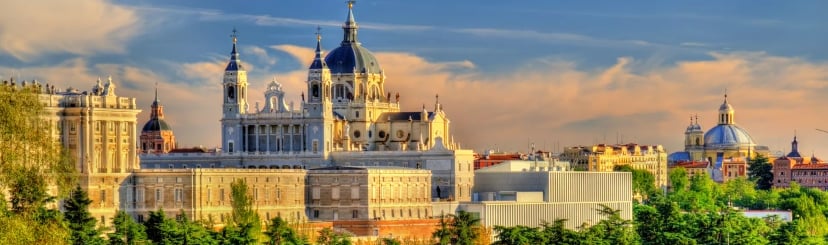
The Royal Palace should come before the Prado when the Palace is the fixed appointment, the group wants royal context, or the day needs a grand civic opening before art. It is not simply another attraction to place beside the Prado. It changes the geography of the entire day. Once you begin at the Palace, you are no longer in the Paseo del Prado museum corridor; you are in the western ceremonial city, where Plaza de Oriente, the Teatro Real side of Ópera, the Almudena edge, Calle Mayor, and the Austrias quarter pull the route in a different direction.
This can be a strong choice. The Palace gives first-time visitors a clear sense of Madrid as a court capital before the Prado asks them to read painting as power, patronage, religion, war, taste, and memory. For travelers who enjoy context, the Palace can make the Prado feel less like a warehouse of masterpieces and more like the visual afterlife of royal collecting. A private guide can use that morning to build a bridge: Habsburg and Bourbon Madrid, court ceremony, religious authority, portraiture, and the way paintings become instruments of state culture. That is a more satisfying connection than simply saying “Palace in the morning, Prado after lunch.”
The consequence is compression. The Palace consumes a different kind of attention from the Prado: architectural scale, room-to-room movement, security rhythm, and ceremonial sequence. After that, the Prado cannot sensibly be treated as a full museum conquest. If the Palace is first, the Prado should usually become a curated arc rather than a long survey. Choose the rooms or themes that complete the Palace story. Do not try to compensate for a shorter Prado visit by adding another museum later. That is how a sophisticated plan turns into a checklist with better cars.
Transport also matters. The distance from the Palace side to the Prado is not a punishing cross-city journey, but it is long enough to break the day if handled casually, especially with a multigenerational group or a dressed-up celebration party. Walking from the Palace toward the Prado through the center can be attractive in theory and tiring in practice. A controlled transfer can make sense after the Palace, particularly if the group is continuing to the museum rather than pausing for lunch. This is one of the places where paying for smoother logistics can change the feel of the day, because it removes the middle-mile drag between two heavy anchors.
Still, the Palace-first route has a clear wrong fit. Avoid it when the Prado is the emotional centerpiece of the trip and the Palace is included only because it seems too important to miss. In that case, starting at the Palace may quietly spend the group’s best cognitive energy on a site they respect but do not love. Better to put the Prado first, make the Palace an exterior and Austrias context walk, or move the Palace to a separate morning with a dedicated Royal Palace Private Tour. The Palace is too strong to be filler and too demanding to be treated as a warm-up by default.
Prado first is still right when the museum is the point of the day
Prado first is the correct choice when the museum is the reason the day exists. That includes travelers who have waited years to see Las Meninas, people who want a serious Goya or Spanish-school arc, and visitors who know that their best concentration comes before lunch. It also includes travelers with limited tolerance for Palace interiors or park wandering. The Prado deserves prime attention when the rest of the itinerary is there to support it, not compete with it.
The strongest Prado-first day does not try to see “the Prado” as an undifferentiated whole. It chooses a route through the museum that gives the day a spine: Spanish monarchy and portraiture, religion and power, Goya’s court and darker worlds, or the broader European conversation that places Spain beside Italy, Flanders, and the Netherlands. Current visitor basics belong on the official Prado visit page (https://www.museodelprado.es/en/visit-the-museum); the more important planning question is what part of the museum deserves your first, freshest attention.
After a Prado-first morning, Retiro should usually follow as recovery, not as a second sightseeing campaign. The temptation is to leave the museum, see that the park is nearby, and add every major park image because it feels efficient. Efficiency is not the same as elegance. The best post-Prado Retiro hour often stays simple: shade, a short walk, a pause near the museum-facing side, and enough green space to loosen the mind before lunch, a hotel reset, or a late afternoon neighborhood shift. If the group wants the lake, the Palacio de Cristal, and a long park circuit, treat that as a different kind of day rather than an afterthought.
Prado first also works well before a late, restrained Royal Palace moment. This does not mean a full Palace interior after a full Prado morning. It means that a guide can use the Palace exterior, Plaza de Oriente, the Opera edge, or the Austrias streets to complete the Madrid picture without demanding another major interior. For many discerning travelers, that is the best tradeoff: the Prado gets intellectual priority, and the Palace gives the late day a civic frame without becoming an endurance test.
The cut-first rule is firm here: if Prado first is the plan, the museum stop to cut is usually the second major art museum, not the park recovery and not lunch. Travelers often sacrifice the breathing space because another museum sounds more culturally serious. That is backwards. Without recovery, the second museum usually becomes thinner than its reputation. Better one fully held Prado visit and a calm Madrid afternoon than a second gallery entered with tired eyes.
Should Retiro be before or after the Prado?
Retiro should be before the Prado when the group needs a softer entry into the day, and after the Prado when the museum deserves the freshest attention. The park is not inherently a morning or afternoon stop. Its best position depends on what problem it is solving: arrival energy, museum resistance, heat exposure, lunch timing, or the mood of the evening.
Put Retiro before the Prado for families, mixed-interest groups, and visitors whose hotel location naturally points toward the park. A stay around the Retiro or Salamanca side can make this feel almost inevitable, but the route still needs boundaries. Begin near Puerta de Alcalá or the western park gates, avoid drifting deep unless the day has room, and let the Prado remain the planned destination rather than an eventual obligation. This is the sequence that can make an art day feel lighter without making it less serious.
Put Retiro after the Prado when the group is art-led or when the museum has a fixed guided start. This is often the cleaner choice for couples and small groups who want a true Prado arc. The park then becomes a decompression space. It gives the body something different to do after standing, looking, and listening. It also creates a mood shift: the day stops feeling like a chain of interiors and starts feeling like Madrid again.
Skip or shorten Retiro when the day is already carrying the Royal Palace, a major lunch, and a serious Prado visit. This is the part many travelers resist because Retiro looks so close to the museum. Closeness is not the same as capacity. A short park edge can be valuable; a full Retiro circuit can push the group into heat, foot fatigue, and late-afternoon impatience. The best version of Retiro recovery is not measured by how many park landmarks you cover. It is measured by whether everyone can still enjoy the next decision.
Madrid does a specific thing to the body on these routes. It is not a city of constant hills like Lisbon or Granada, but the broad avenues, museum floors, Palace rooms, park paths, and long diagonals between neighborhoods accumulate quietly. The body feels it in the lower back after standing in galleries, in the shoulders after crossing wide sunny stretches, and in the patience of the group when a “nearby” stop turns out to require another twenty minutes of movement. That physical accumulation should decide the sequence more than a map pin does.
What museum stop should you cut if the Prado is not first?
Cut the extra major art museum before you cut the logic of the day. If the plan already includes the Royal Palace, Retiro, and a focused Prado visit, the museum stop to cut is usually Reina Sofía or Thyssen, depending on the traveler’s actual art priorities. Do not try to include Prado, Reina Sofía, Thyssen, and Palace in one day. Private access or better tickets cannot fix trying to stack too many major art stops.
Reina Sofía should stay only when modern Spanish art is a true priority, especially if the group cares deeply about Picasso, Guernica, Civil War memory, or the modern break from the Prado’s older court and religious worlds. Otherwise, it is the first major museum to remove from a Prado-and-Palace day. The museum is close enough to the Atocha end of the art corridor that visitors often assume it is easy to add. In practice, it asks for another mental language, another building rhythm, and another emotional register. Check the official Reina Sofía visit page (https://www.museoreinasofia.es/en/visit) for current visit information, but do not let availability decide whether it belongs in the day.
Thyssen is the better add-on only when the group wants a bridge across European painting and the day does not already have the Royal Palace. Its strength is breadth and continuity, not relief. The official Thyssen permanent collection page (https://www.museothyssen.org/en/collection/permanent-collection) is useful for understanding the collection’s scope, but the planning judgment is this: Thyssen after Prado is rarely a comfort upgrade. It is another high-quality demand on the same visual system. If the travelers are collectors, painters, or serious art generalists, it may be worth it. If they are first-time Madrid visitors trying to keep the day balanced, it is usually the wrong place to spend the afternoon.
For travelers comparing Madrid’s major museums in a more art-led way, a broader private museum plan can help; this article is deliberately narrower. The decision here is not which Madrid museum is “best.” It is which museum, if added, will damage the Prado day you actually want. Orange Donut Tours can build a dedicated art route through Madrid Museum Private Tours, but on a Prado, Retiro, and Royal Palace day, restraint is often the more refined choice.
The most common regret is not missing a second museum. It is remembering the Prado as “impressive” but not remembering why it mattered, because the day kept pulling attention toward the next booking. If the itinerary is getting crowded, cut the stop that merely proves you were in Madrid, and keep the stop that lets Madrid make sense.
The mood tradeoff: a better first stop makes the evening feel possible
The best art-day sequence makes the evening feel available rather than rescued. Madrid’s late rhythm is a gift only when the daytime route leaves enough appetite for it. A Prado-first morning followed by Retiro can lead naturally toward Las Letras, the Salamanca edge, or a hotel pause before dinner. A Palace-first morning can lead toward Austrias context and then a controlled transfer to the Prado. A Retiro-first morning can make the Prado feel less abrupt and leave the later day calmer. The wrong order does the opposite: it makes dinner feel like an obligation at the end of a cultural marathon.
This is where trip mood matters more than attraction count. A day that begins with the Palace and then overreaches into Prado plus Reina Sofía often becomes heavy by late afternoon. A day that begins with too long in Retiro can make the Prado feel squeezed. A day that begins with the Prado and then tries to “use the neighborhood” by adding every nearby museum can turn the Paseo del Prado into a corridor of diminishing returns. None of these failures is dramatic in the moment. They show up later, when the group is too flat to enjoy the table, the walk, or the city after dark.
The better mood arc has contrast. Interior to green space. Ceremony to paintings. Art to a neighborhood walk. A short route through Las Letras after a Prado visit can feel richer than another hour indoors because the literary streets, smaller squares, and dinner approaches give the mind somewhere to place what it has just seen. For travelers planning around a late meal, a separate guide to Madrid’s late-dinner museum rhythm can help decide how much culture the day should carry before the evening begins.
The firm editorial call is this: do not protect the itinerary at the expense of the evening. Madrid rewards travelers who leave a little space between cultural intensity and dinner. That space can be Retiro, a hotel reset, a short Las Letras walk, or a quiet transfer back from the Palace side. What it should not be is a second or third museum added because it looks close enough.
Where private planning earns its cost, and where it cannot rescue the day
Private planning earns its cost when it edits the opening anchor, protects the Prado’s best attention, and controls the transitions that maps underestimate. A guide is not valuable only because of what they say in front of a painting. The better value is often the decision before the day begins: whether the Palace should set the clock, whether Retiro should be a prelude or a recovery, and which Prado rooms deserve the group’s first serious attention.
Private guiding also helps when the travelers have different tolerances. One couple may want the Prado to be the emotional center. Their teenage children may need Retiro before any museum. Older parents may enjoy the Palace but not want a long walk across the center afterward. A celebration group may care about keeping everyone fresh for dinner more than covering every room. In these cases, the guide’s role is not to add more content. It is to defend the day from the wrong kind of abundance.
A chauffeur can earn its place in narrower conditions: Palace-to-Prado transfers, hot-weather pivots, older travelers, dressed-up groups, or hotel returns when the day needs a clean break. It does not earn its cost if the itinerary itself is overloaded. Premium spend does not help when the problem is trying to turn the Prado, Reina Sofía, Thyssen, the Royal Palace, and Retiro into one seamless day. Money can smooth movement; it cannot make attention infinite.
For a short Madrid stay, the most valuable customization is usually not “more access.” It is choosing the right first anchor so that the Prado still lands. That is where a tailor-made day can outperform a famous-name checklist: it gives the museum its proper weight without forcing every adjacent site to compete with it. For a private route that calibrates art, Palace context, Retiro recovery, transfers, and dinner energy around your travelers, explore Private Tours in Madrid or Inquire now.
Three clean sequences that avoid the art-day trap
The best Madrid sequence is the one that names its sacrifice early. Each of the routes below works because it does not pretend every major site can receive full attention in the same day.
Retiro edge, then focused Prado, then a light neighborhood finish
Choose this for mixed-interest travelers and comfort-first first-timers. Keep Retiro close to the Prado-facing side, enter the museum with a defined route, then let the later day move toward Las Letras, Salamanca, or a hotel pause. The sacrifice is Palace depth. You can include Palace context later, but do not force a full Palace interior after a full Prado visit unless the group has unusually high stamina.
Royal Palace, controlled transfer, then Prado as a curated second act
Choose this when the Palace has the day’s fixed window or when royal context will make the Prado more meaningful. Start in Ópera and Plaza de Oriente, keep the Austrias add-on restrained, then move cleanly to the Prado. The sacrifice is museum breadth. Reina Sofía and Thyssen should usually fall away unless the day is explicitly designed for art specialists.
Prado first, Retiro recovery, then Palace exterior or Austrias context
Choose this when the Prado is the priority. Give the museum the first serious attention of the day, use Retiro to decompress, and save the Palace side for a lighter civic frame. The sacrifice is completeness. You will not “do” the Palace in the same way, but the day will be remembered as a strong Prado day rather than a rushed Madrid sampler.
Travelers with only one private museum slot should also consider whether this is really a Prado-and-city day or a museum-comparison day. Those are different projects. For a separate decision on Prado, Reina Sofía, or Thyssen as the one museum anchor, the guide to choosing one private museum day in Madrid is the more precise next step.
FAQ
Should I visit the Prado first in Madrid?
Visit the Prado first if the museum is the main reason for the day, if your group has its best concentration in the morning, or if you would rather shorten the Royal Palace and Retiro than dilute the Prado. Do not put the Prado first only because it is the most famous stop.
Is Retiro better before or after the Prado?
Retiro is better before the Prado when the group needs movement, air, or a softer start. It is better after the Prado when the museum deserves the freshest attention and the park’s role is recovery. The key is to keep Retiro disciplined; a full park circuit can drain the Prado day.
Can I visit the Royal Palace and Prado in one day?
Yes, the Royal Palace and Prado can work in one day if one of them is edited. Palace first works when royal context sets up the Prado, but the Prado should then be focused. Prado first works when art is the priority, but the Palace should usually become lighter, exterior-led, or saved for another morning.
What museum should I cut if I want Prado, Retiro, and the Royal Palace?
Cut the extra major art museum first. Reina Sofía should stay only if modern Spanish art or Guernica is a true priority. Thyssen should stay only if the group wants a broader European painting arc and the Palace is not already taking major attention.
Can I do Prado, Reina Sofía, Thyssen, and the Royal Palace in one day?
You can physically attempt it, but it is a poor plan for most discerning travelers. The result is usually visual fatigue, weak recall, and a flattened evening. Better tickets, private guiding, or a chauffeur cannot make that much major cultural attention feel seamless.
When is the Royal Palace a better first stop than the Prado?
The Royal Palace is a better first stop when it has the day’s fixed visit window, when first-time context matters more than immediate art depth, or when the group wants to understand Madrid as a court city before entering the Prado. It is the wrong first stop when the Prado is the emotional centerpiece.
Is a private guide worth it if the Prado is not the first stop?
Yes, if the guide is shaping the whole day rather than only explaining paintings. The value is in choosing the right opening anchor, protecting the Prado route from overreach, and adjusting transitions among Retiro, the Palace side, lunch, and the evening.
What is the best Madrid art-day sequence for first-time visitors?
For many first-time visitors, the best sequence is Retiro edge first, a focused Prado visit, then a light neighborhood or dinner-oriented finish. Choose Royal Palace first instead when palace context or a fixed visit window controls the day. Choose Prado first when art is the priority.
If you’re interested in any private tours of Madrid, please reach out to us.



 So if you are looking for the absolute best in Madrid & surroundings with authentic local fully-licensed native guides whose English you can actually understand and with an exclusive and amazingly fun itinerary













