Madrid Executive Day Blueprint for Bespoke Private Groups: Prado, Royal Palace and Salamanca Without Agenda Drift

Updated
Verdict: for a senior private group in Madrid, the cleanest executive day is a curated Prado first, a deliberately contained Royal Palace second, and Salamanca as the lunch, retail or hotel-return reset, not as a fourth sightseeing district. This works because Madrid’s high-authority anchors sit on different city edges: the Prado on the Paseo del Prado and Retiro spine, the Royal Palace on Calle Bailén by Plaza de Oriente, and Salamanca around Serrano and Velázquez, so every casual detour becomes a transfer tax. The clearest exception is an art-led board, collector family or museum-focused celebration; then the Prado should expand and the Royal Palace should move to another day.
Madrid’s executive-group day succeeds when each stop is assigned one job: the Prado for intellectual authority, the Royal Palace for institutional scale, and Salamanca for hospitality control. Senior groups rarely fail because the Prado is underwhelming; they fail because an unedited Prado survey drains the room before the palace, lunch or hotel return can do its work. The non-obvious local cue is the Jerónimos side of the Prado: once you are tempted to turn a museum exit into Retiro, Puerta de Alcalá, Cibeles and “just one more photo,” the day has already started to drift.
The decision grid for a Madrid executive private day:
- Prado: best for cultural authority, leadership-level context and a controlled first impression, but only if the route is edited hard.
- Royal Palace: best for state scale, monarchy context and a lighter change of medium after the museum, but not for exhaustive room-by-room touring.
- Salamanca: best for lunch, refined retail, a calmer guest reset and smoother returns to many upscale stays, but weak as a pure sightseeing add-on.
- Retiro: best as a short breathing-space connector when energy allows; it should be cut before the cultural anchors are diluted.
How to plan a private Madrid executive day without agenda drift
The planning answer is to make the day route-led, not attraction-led. Prado, Royal Palace and Salamanca can sit in one executive Madrid day when they are sequenced as three different functions rather than three equal sightseeing blocks. The Prado takes the first cognitive slot, the Royal Palace takes the public-history slot, and Salamanca takes the hospitality slot. That distinction matters because a private group of decision-makers, spouses, clients or multigenerational guests will not experience the day as a checklist; they will experience it as a series of attention resets.
The strongest route is usually Prado in the morning, Royal Palace before lunch or early afternoon, then Salamanca for lunch, retail or an elegant return corridor. This is not because the Prado is “better” than the palace. It is because the Prado asks more from the group: visual attention, standing focus, guide interpretation and restraint around masterpieces. Put it too late and even excellent guiding becomes background noise. Put Salamanca too early and the group relaxes into hospitality before the day has achieved its cultural authority.
The counterintuitive correction is that Retiro is often overvalued in an executive day. The park is a graceful Madrid asset, and it belongs in many private stays, but it can quietly steal the concentration needed for the Prado-to-Palace move. A short Retiro edge, perhaps after the Prado if the weather and pace are kind, can work. A full park interlude before the Royal Palace usually makes the later transfer feel like an obligation rather than a progression.
Prado first: authority without turning the museum into the whole day
The Prado should open the day because it is the stop most likely to reward a fresh room and punish a tired one. For executive private groups, the right Prado visit is not a comprehensive survey; it is a decisive editorial route. Think in terms of one strong intellectual thread, supported by a few works that let the guide explain Spanish court culture, power, patronage, belief and image-making without trapping the group in art-historical sprawl. The best Prado segment feels complete because it has a point of view, not because it has covered every famous canvas.
Group size changes the Prado more than many planners expect. A couple or family of four can linger, double back and follow curiosity. A senior group of ten or more cannot do that without losing people at doorways, bottlenecks and bench pauses. The larger the group, the more the guide must protect sight lines and transitions. The Prado’s galleries reward depth, but a private executive day rewards usable depth: enough context to make the visit memorable, not so much that the palace and Salamanca become recovery time.
This is why a dedicated Prado Private Tour can be designed very differently from the Prado slot inside an executive day. A standalone art morning can absorb slower looking, specialist questions and a wider collection arc. In this blueprint, the Prado is the first anchor, not the entire thesis. The difference is not academic. If the group leaves the museum mentally full but physically patient, the rest of the day still has momentum. If the group leaves with tired legs and no appetite for another interpretive stop, the palace will feel like a forced second act.
Royal Palace second: scale, power and a change of medium
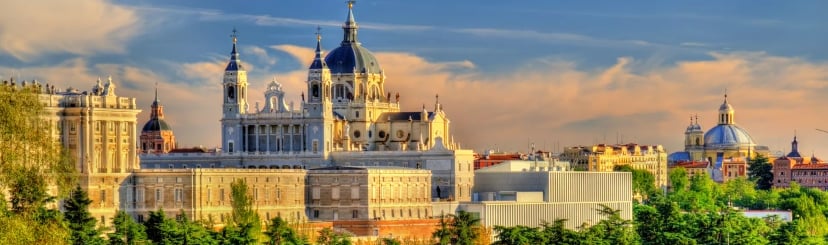
The Royal Palace belongs after the Prado when the group needs a shift from paintings to rooms, state ceremony and architectural scale. It gives Madrid’s executive day a public-institutional register that the museum alone cannot provide. The move from the Prado’s collected power to the palace’s performed power is useful for senior travelers because it changes the conversation: from patronage and image to monarchy, diplomacy, court ritual and the city’s western ceremonial edge.
The mistake is to tour the Royal Palace as if it must compete with the Prado for depth. It should not. The palace works best in this route as a contained second anchor: enough time to understand the scale of Spanish monarchy and the logic of the rooms, not so much time that every chamber becomes equal. A private guide earns value here by shaping the palace as a coherent public story. Without that discipline, the group can start to feel that they are simply being moved through decorated interiors before lunch.
For a group with guests who tire easily, the Royal Palace can also be the first cut in depth, not necessarily the first cut in presence. Keep the palace, reduce the room-by-room ambition, and preserve the Salamanca reset. A palace mention in the day matters for first-time Madrid authority, but palace over-detail can be expensive in energy. A focused Royal Palace Private Tour is valuable when the palace itself is the main event; inside this executive blueprint, it should be treated as an elegant hinge between museum intensity and hospitality.
Salamanca last: lunch, retail and the executive reset
Salamanca should usually close the public-facing part of the day because it changes the group’s state. After the Prado and Royal Palace, the district gives planners a practical place for lunch, private retail, quieter guest conversation and a controlled return toward many comfort-first hotel bases. The point is not to “see Salamanca” in the same way the group sees the Prado. The point is to let Salamanca do what it does best: absorb the day into a polished hospitality rhythm.
The Salamanca slot should be specific. Serrano, Velázquez, Ortega y Gasset and the Goya edge are not interchangeable once a group is tired. If the plan says only “shopping time in Salamanca,” guests scatter, hosts lose control of timing, and the return becomes vague. If the plan defines a lunch address, a short retail corridor, a pickup point and an optional hotel return, the district becomes a release valve rather than an agenda leak. That is the commercial logic behind using Salamanca well.
For some groups, a dedicated Salamanca Private Tour or a deeper shopping design makes more sense than forcing Salamanca into a full cultural day. If the trip is built around fashion, jewelry, design, private purchases or a celebration lunch, Salamanca can lead its own day. In this blueprint, Salamanca is strongest as the reset after authority has already been earned. Its value is not only retail; it is mood control.
The Royal Palace-to-Salamanca transfer hinge is where good plans drift
The Royal Palace-to-Salamanca transfer hinge is the fragile middle of this itinerary. After the palace, the group is on Madrid’s western ceremonial side near Calle Bailén, Plaza de Oriente and Ópera. Salamanca sits across the city’s more elegant eastern axis, beyond Cibeles, Puerta de Alcalá and the Serrano-Velázquez grid. The transfer is not impossible, but it must be designed. If it is treated as empty travel time, someone will suggest Plaza Mayor, Gran Vía, Mercado de San Miguel, a quick Retiro stop or “just a look” at Cibeles, and the day begins to lose its executive shape.
This is where a private planner should be firm. The transfer should either be a clean chauffeured move with a short piece of guided context, or it should be deliberately broken for one precise reason. It should not become a rolling committee of additions. Madrid is generous with attractive in-between places, and that is exactly the danger. The city makes it easy to justify one more famous corner; the group then pays in lunch delay, uneven attention and a weaker hotel return.
The physical consequence is real. The Prado and palace already require standing, gallery pacing, stair awareness and repeated regrouping. Add a loose west-to-east transfer with photo stops and the body begins to feel the city as hard surfaces, curb decisions, sun exposure and slow reassembly. The mood consequence is just as important: the day starts to feel longer than it is. A clean transfer makes the program feel intentional. A wandering transfer makes even a premium day feel committee-built.
A Madrid executive group should not be given a maximalist first-time itinerary
Executive groups should not be given a maximalist first-time Madrid itinerary. That sentence is the simplest guardrail for this article. The Prado, Royal Palace and Salamanca already create a complete executive arc when properly edited. Adding Plaza Mayor, Gran Vía, a market, deep Retiro, a second museum and a formal dinner briefing on the same day does not make the plan more impressive. It makes the host look undecided.
The cut-first rule is also simple: remove the add-on that does not serve the day’s core job. If the day is about cultural authority and client hospitality, cut the second museum. If the day is about public Madrid and a calm lunch, cut deep Retiro. If the day is about a board spouse program or celebration retail, cut the palace depth before you cut Salamanca. The right omission is not a downgrade; it is the condition that lets the remaining pieces land.
Premium transport or a private guide does not solve an agenda with too many committee-requested stops. A chauffeur can reduce transfer discomfort, and an expert guide can convert movement into context, but neither can restore attention once the itinerary has too many purposes. Premium spend earns its cost when it protects sequencing, privacy, pacing, pickup precision and interpretive quality. It does not earn its cost when it is used to disguise overpacking.
How group size changes the Prado, Royal Palace and Salamanca depth
Group size changes not only logistics but the emotional tone of the day. A private couple can accept a little spontaneity. A family of six can pivot if one person needs coffee or a rest. A group of twelve senior guests, clients or relatives needs fewer pivots, clearer meeting points and more confident edits. The larger the group, the more each doorway, cloakroom decision, restroom pause and vehicle reassembly matters. This is especially true when the day moves from museum to palace to district.
At the Prado, larger groups need a smaller interpretive arc. At the Royal Palace, they need a tighter route and less room-by-room equality. In Salamanca, they need a defined lunch or retail reset instead of open-ended free time. The planning mistake is to scale up the guest count without scaling down the content. More people should usually mean fewer interpretive threads, fewer optional stops and stronger transitions.
Depth rules by group profile:
- Two to four guests: allow more conversational Prado depth and one short curiosity detour if the palace slot is protected.
- Five to eight guests: keep the Prado to one main thread, define the palace route, and use Salamanca for a planned lunch or retail pause.
- Nine to fifteen guests: reduce museum depth, avoid unplanned Retiro time, and design the Royal Palace-to-Salamanca transfer hinge before the day begins.
- Larger private groups: consider splitting into guide-led subgroups at the Prado or using a larger-group format through Private Tours for Large Groups so attention does not collapse around doorways and explanations.
The timing blueprint: authority before hospitality
The most reliable rhythm is cultural authority before hospitality. Start with the Prado while attention is fresh. Move to the Royal Palace while the group can still absorb a second interpretive register. Then let Salamanca carry lunch, retail, conversation and return control. This order gives the host a day that feels purposeful rather than busy. It also prevents the classic Madrid error of letting a beautiful lunch district absorb the group before the serious cultural work has happened.
A morning Prado should not be padded with a long preamble. The guide can set the frame outside or in the first transition, but the group should feel quickly that they are inside the point of the day. After the Prado, do not linger indefinitely on the museum-park edge unless Retiro is intentionally part of the plan. Move west with purpose. By the time the group reaches the Royal Palace, the day should feel like it has a second chapter, not like it is searching for one.
The palace-to-Salamanca move then becomes the hospitality bridge. This is where a planner can choose between a direct transfer to lunch, a short guided commentary through central Madrid, or a defined retail arrival. What should not happen is a vague “we will see how we feel” gap. In private leisure travel, flexibility is valuable. In executive private-group planning, unbounded flexibility often becomes drift.
For groups building a wider stay, the blueprint should sit beside, not replace, a broader Madrid plan. A first-time itinerary may still need tapas, Retiro, a market, Las Letras or a day trip, but those belong in other slots. For a wider sense of how museum-heavy days compare, the existing private museum day guide is useful precisely because it solves a different question: which museum should lead when the museum is the point.
When Retiro belongs, and when to cut it first
Retiro belongs when it helps the body, not when it decorates the agenda. A short Retiro edge after the Prado can give the group air, greenery and a softer transition before a vehicle move. The park is especially useful when the day has children, older relatives, spouses who need a pause, or guests who respond better to alternating interiors with open space. But Retiro should not be treated as a full fourth anchor in this particular blueprint.
The problem is that Retiro sits temptingly close to the Prado. From the museum’s eastern logic, it feels harmless to add the park, Puerta de Alcalá and perhaps Cibeles before moving west. In practice, those additions spend the exact energy the group needs for the Royal Palace. The city does not feel difficult in one single moment; it accumulates through standing time, pavement, regrouping and sun or heat exposure. By Salamanca, a group that has overused the Prado-Retiro edge often wants only to sit down.
Cut Retiro first when the group has a formal lunch, mixed mobility, a hard hotel return, or a late-afternoon commitment. Keep it only when it solves a body problem or a mood problem. A short green pause can make the day feel calmer. A long park add-on can make the cultural program feel diluted. The difference is intention.
Lunch and retail in Salamanca should be designed, not left open
Salamanca is where hospitality either sharpens the day or loosens it. A private executive group may include senior travelers, spouses, clients, adult children, celebration guests or food-and-wine travelers. Those profiles do not need the same afternoon. Some want a seated lunch with good pacing. Some want a brief retail corridor. Some want a clean hotel return. The planner’s job is to decide which of those outcomes matters most before the group reaches Serrano.
An open Salamanca block can sound gracious, but it often creates friction. Guests disperse along Serrano, Velázquez, Ortega y Gasset or toward the Goya side; one person wants a boutique, another wants coffee, another assumes the day is ending, and the host begins managing phones instead of enjoying the program. A designed Salamanca reset defines the stop: lunch first, then optional retail; retail first, then pickup; or lunch only, with no performative shopping at all.
This is also where the executive day can connect naturally to deeper shopping or style planning without becoming a shopping article. If Salamanca is the primary purpose, use the dedicated retail logic in the white-glove Madrid shopping day guide. If Salamanca is the closing reset after Prado and Palace, keep it narrower. The best Salamanca slot is the one that gives the group a sense of arrival rather than another set of decisions.
What to verify before locking the day
The main facts to verify are access, current ticketing conditions and any group-specific rules for the Prado and Royal Palace. Do not build the whole article or itinerary around fragile details such as exact opening hours, prices, temporary exhibitions or special access unless they have been checked for the actual date. For the Prado, start with the official Prado visit page (https://www.museodelprado.es/en/visit-the-museum). For the Royal Palace, check the official Royal Palace page (https://www.patrimonionacional.es/en/visita/royal-palace-madrid). Those sources should confirm practical visit information; the editorial judgment about pacing still belongs to the planner.
Verification is not the same as over-specification. A senior private group does not need a minute-by-minute public schedule printed like a conference agenda. It needs protected tickets where relevant, clear pickup points, a defined interpretive scope, a lunch plan, and a decision rule for what gets cut if the day tightens. Madrid rewards preparation, but it punishes rigidity when traffic, heat, guest energy or conversation changes the pace.
Use official pages to avoid stale operational assumptions. Use local planning judgment to avoid a sterile day. The Prado can be confirmed by source; the right Prado depth for a particular group must be judged. The palace can be confirmed by source; the right palace depth after a museum morning must be judged. Salamanca can be mapped; the right amount of retail freedom depends on the group’s mood, relationship and hosting purpose.
Spend that earns its place in this route
Premium spend earns its place when it reduces friction the group can actually feel. In this Madrid route, that means an expert guide who can edit the Prado, interpret the Royal Palace without overloading it, and hold the day together between the western palace edge and the eastern Salamanca reset. It also means transport that appears at the right place and time, especially around the Royal Palace-to-Salamanca transfer hinge. The value is not luxury theater; it is fewer dead minutes, fewer awkward regroupings and fewer decisions handed back to the host.
Spend is weaker when it tries to compensate for an undecided agenda. A nicer vehicle does not make a fourth and fifth stop more coherent. A more credentialed guide cannot make every committee suggestion equally important. A longer day can even reduce the perceived quality if guests end up tired before the lunch or evening plan. The most useful premium choice is often restraint: a better guide, cleaner routing, fewer stops and a firm refusal to add attractions that do not serve the executive purpose.
This is why corporate, family and celebration groups often need the same kind of protection even when their social tone is different. A board group may drift because every stakeholder wants a brand-safe cultural highlight. A family celebration may drift because each generation adds one preference. A client-hosted day may drift because nobody wants to say no. The planning mechanics are similar: define the day’s job, protect the sequence, and let Salamanca absorb the social part after the cultural authority is complete.
How a bespoke private planner protects the day from committee additions
A bespoke planner protects this day by giving the host a defensible structure before the group begins negotiating. The framework is simple: Prado for authority, Royal Palace for scale, Salamanca for hospitality. When someone asks for Plaza Mayor, a second museum, deep Retiro or a market stop, the answer is not merely “there is no time.” The answer is that the addition would change the day’s function and weaken the return. That is a stronger and more diplomatic way to protect the plan.
This is the moment where Orange Donut Tours is most useful for private groups: not by making the day sound fuller, but by making it behave better. The right guide and planner can calibrate Prado depth, decide whether the palace needs a full or compressed treatment, and turn Salamanca into a lunch, retail or hotel-return reset rather than a vague afterthought. For executive and mixed private groups, that structure reduces the kind of friction that usually lands on the host.
For a corporate-facing version of this blueprint, see Corporate Group and Event Private Tours. For a tailor-made version built around your guests, pace and hosting purpose, Inquire now.
The best route-based comparison for planners
The best route is not always the same route; it is the route that preserves the day’s purpose. For most executive private groups, Prado to Royal Palace to Salamanca is the cleanest authority-to-hospitality sequence. It front-loads attention, moves from museum to state setting, and finishes where lunch, retail and hotel returns can be handled with less public chaos. It also gives the host a clear story to tell guests: the day begins with Spain’s cultural image, moves through royal power, and ends in contemporary Madrid hospitality.
The main alternative is Royal Palace to Prado to Salamanca. This can work when palace access, hotel location or group energy makes a western start more sensible. It is weaker for art-led groups because the Prado then arrives after the first standing block, but it can be easier for guests staying near Ópera, the old center or a palace-adjacent venue. The third route, Prado to Salamanca to Royal Palace, should be used sparingly. Lunch can soften the day beautifully, but once guests settle into Salamanca, pulling them back across the city to the palace often feels like reopening the agenda.
Route comparison in plain terms:
- Prado, Royal Palace, Salamanca: best default for executive groups that need authority, public context and a controlled hospitality finish.
- Royal Palace, Prado, Salamanca: useful when western logistics or palace timing leads, but the Prado must be edited even more tightly.
- Prado, Salamanca, Royal Palace: possible for unusual timing, but risky because lunch and retail can make the palace feel like an afterthought.
- Prado and Salamanca only: better than a forced three-anchor day when the group is art-led, retail-led, or hosting a serious lunch.
The final planning rule
The final rule is to choose the day’s governing outcome before choosing the stops. If the outcome is authority, protect the Prado and compress everything else. If the outcome is public Madrid, give the Royal Palace enough room and reduce museum ambition. If the outcome is client hospitality or celebration ease, let Salamanca have a real role and cut cultural extras before they flatten the afternoon. Madrid will always offer another worthy stop; the executive planner’s job is deciding which worthy stop does not belong today.
Used well, Prado, Royal Palace and Salamanca create a Madrid day that feels complete without feeling swollen. Used poorly, the same three names become a prestige checklist with a delayed lunch and a tired return. The difference is not simply budget. It is editorial discipline: one route, three functions, and no agenda drift disguised as generosity.
FAQ
Can Prado, Royal Palace and Salamanca fit into one private Madrid day?
Yes, they can fit when each stop has a defined role and the Prado and Royal Palace are edited. The safest structure is Prado first, Royal Palace second, and Salamanca as the lunch, retail or return reset.
Should an executive group visit the Prado or Royal Palace first?
Most executive groups should visit the Prado first because it requires the freshest attention. The Royal Palace can then work as a change of medium and scale before the day moves toward Salamanca.
Is Salamanca worth including if the group is not shopping?
Yes, Salamanca can still be worth including as a lunch, hospitality and hotel-return reset. It should not be treated as sightseeing filler if retail is not a real interest.
Where does agenda drift usually happen in this Madrid route?
Agenda drift usually happens between the Royal Palace and Salamanca, when guests suggest extra central stops. That Royal Palace-to-Salamanca transfer hinge should be designed before the day begins.
Should Retiro be included in a Prado, Royal Palace and Salamanca day?
Retiro should be included only as a short breathing-space stop when energy and timing allow. It should be cut first if the day already includes deep Prado, palace touring and a fixed Salamanca lunch.
How long should a senior private group spend in the Prado?
A senior private group should usually take a curated Prado route rather than a broad survey. The exact length depends on group size and interest, but the goal is to leave with attention intact for the Royal Palace.
Does a chauffeur solve the logistics for this executive Madrid day?
A chauffeur helps with comfort and the palace-to-Salamanca transfer, but it does not solve an overpacked agenda. The route still needs firm edits and clear priorities.
When should this plan become two separate days?
Make it two days when the group wants a deep Prado visit, a full Royal Palace treatment, formal lunch, retail time and Retiro. Those goals are all valid, but they should not be forced into one executive day.
If you’re interested in any private tours of Madrid, please reach out to us.



 So if you are looking for the absolute best in Madrid & surroundings with authentic local fully-licensed native guides whose English you can actually understand and with an exclusive and amazingly fun itinerary













