Madrid Before a Long Lunch: Palace Quarter, Retiro or One Focused Museum?

Updated
Choose one focused museum by default: before a serious Madrid lunch, a tight Prado, Thyssen or Reina Sofía visit gives the strongest cultural return without turning the meal into recovery. It works because Madrid’s best pre-lunch geography is a museum-park spine: the Prado edge, Retiro gates, Atocha, and Las Letras can be joined without a cross-city reset, while the long lunch as the day anchor keeps you from overfilling the morning. The clearest exception is a lunch west of Sol or around the Austrias; then the Palace Quarter beats forcing an east-side museum. If heat, jet lag or children are already shaping the morning, make Retiro or a guided walk the answer.
Madrid rewards mornings planned backward from the table, not mornings built from a checklist and then dragged toward lunch. The quiet hinge most visitors miss is the Cibeles–Puerta de Alcalá line: once your morning drifts west of Cibeles toward Sol, Ópera and Plaza de Oriente, you are in a different lunch geography than the Prado–Retiro–Las Letras side of the city. That hinge matters more than prestige. The wrong pre-lunch choice can make a beautiful reservation feel like a place to sit down rather than a meal you have been looking forward to.
This guide does not try to choose restaurants or turn Madrid into a food overview. It solves one planning problem: before a long lunch, should you spend the morning in the Palace Quarter, Retiro or one focused museum? Orange Donut Tours often treats that question as a pacing decision first and a sightseeing decision second, because the best private morning is not the one that includes the most icons; it is the one that delivers you to lunch alert, hungry and still in a good mood.
How should you spend a Madrid morning before a long lunch?
The best pre-lunch route is the one that matches three things: the location of lunch, the walking load your group can enjoy before sitting down, and how much attention you want to spend before the meal. In Madrid, those criteria usually point to one focused museum, then Retiro, then the Palace Quarter under the right conditions.
Default route: one focused museum. Choose this when lunch is near the Prado, Las Letras, Retiro, Atocha, Recoletos or Salamanca. It gives the morning cultural weight without forcing too many outdoor transfers. The key is discipline: one museum, one theme, and an exit while everyone still wants lunch rather than silence.
Calmest runner-up: Retiro. Choose this when the meal is meant to be the emotional center of the day, when the weather is kind, or when your group includes children, older parents or anyone who dislikes heavy museum mornings. Retiro protects appetite and conversation, especially if lunch is near the park or in Salamanca.
Conditional route: Palace Quarter and Austrias. Choose this when lunch pulls you west toward Ópera, Plaza de Oriente, Calle Mayor, Plaza Mayor or La Latina. It is rewarding when it sits beside the meal, but it becomes an expensive-feeling detour if your lunch is east by the Prado or Retiro.
First thing to cut: the extra pre-lunch food stop. A coffee, a pastry or one small bite can be useful; a full market wander or tapas preview often steals the appetite that justified the lunch in the first place.
The comparison is not a ranking of Madrid’s attractions. It is a route-based comparison, because lunch geography changes the value of each stop. A Prado morning before a Las Letras lunch can feel precise and elegant. The same Prado morning before a west-side lunch can become a taxi decision, a timing negotiation and a mild appetite drain. A Palace Quarter walk before an Austrias lunch feels natural. The same walk before a Salamanca lunch asks the group to cross the city just when the day should be getting easier.
For travelers planning a private day, the useful question is not “What is the most famous thing we can fit before lunch?” It is “What will still feel worthwhile when we are seated for two or three hours afterward?” A broader overview of the city can belong on another morning, or inside private Madrid tours that are built around your hotel, lunch and energy rather than around a fixed list.
Why lunch geography changes the morning in Madrid
Lunch geography should choose the morning because Madrid’s central districts sit close on a map but do not behave like one compact pre-lunch zone. The Prado, Retiro and Las Letras form one workable arc. The Palace Quarter, Ópera and Austrias form another. Crossing between them is possible, but before a long lunch it often costs the very thing you are trying to preserve: ease.
Think of the city in three pre-lunch territories. The first is the museum-park spine: the Prado, the Thyssen-Bornemisza, the Jerónimos edge of Retiro, the Puerta de Alcalá approach, Atocha and the lower streets of Las Letras. This is the strongest territory for one focused museum or a museum-plus-short-walk morning. It lets you use the early part of the day for culture, then move gently toward lunch without asking the group to reorient in a taxi or cross a busier part of the center.
The second territory is the west side: the Royal Palace, Plaza de Oriente, Teatro Real, Calle Mayor, Plaza de la Villa, Plaza Mayor and the Austrias streets around them. This is a strong choice when the meal sits west of Sol or when the morning is about royal and Habsburg context. It is less efficient when the meal sits east. The Palace Quarter is not “near everything” in a useful pre-lunch sense; it is near the right things only if the meal belongs to that side of the city.
The third territory is the lunch itself. Madrid rewards a long meal more than many first-time visitors expect. A long lunch as the day anchor is not a gap between sights; it is the sightline for the whole day. If the meal is in Las Letras, you want the morning to narrow into those streets. If it is near Retiro or Salamanca, the morning should avoid westward drift. If it is in the Austrias, a Prado-first plan may still work, but only if the museum is the clear priority and you are comfortable spending part of the morning in transit rather than in Madrid itself.
Madrid does not usually tire travelers through steep climbs in the historic center; it tires them through broad exposed avenues, museum floors, security rhythms, traffic crossings and false-near distances. A walk from the Palace Quarter toward the Prado can look reasonable until the group is crossing Sol, deciding whether to continue down Carrera de San Jerónimo, and checking the time while appetite turns into impatience. In warm months, the sun on open plazas and wide streets can make a plan feel heavier than the mileage suggests. In cooler months, the same distance can still flatten the morning if it forces too many transitions.
Mood matters too, especially for couples and celebration travelers. The mood-preserving decision is to stop the cultural morning while conversation is still easy. The mood-killing mistake is adding a second interior because it is “right there,” then arriving at lunch with the first ten minutes spent decompressing. A Madrid lunch should feel like the day opening out, not like a rescue stop.
Choose one focused museum when lunch sits on the Prado–Retiro spine
One focused museum is the strongest pre-lunch choice when your meal is near the Prado, Las Letras, Retiro, Atocha, Recoletos or Salamanca. It concentrates Madrid’s cultural payoff in the part of the city where you are already likely to be eating, and it lets the meal absorb the rest of the day rather than compete with it.
The word “focused” does most of the work. The Prado can be magnificent before lunch, but not if you treat it as a comprehensive survey. A better pre-lunch Prado visit might follow one line through Velázquez, Goya and a few paintings that explain court, empire and Madrid’s self-image. It might skip entire wings that would be worthwhile on another day. It should end while the group still has appetite and verbal energy. For practical visit details, use the official Prado visit page (https://www.museodelprado.es/en/visit-the-museum); for the actual experience, the curatorial choice matters more than the amount of time you spend inside.
The Thyssen can be easier before lunch for travelers who want range without the Prado’s gravity. Its strength in this slot is not that it is “lighter” in a trivial sense, but that it can carry a clear art-historical thread without making the morning feel monumental. The official Thyssen permanent collection page (https://www.museothyssen.org/en/collection/permanent-collection) is useful for context, but the pre-lunch version should still be selective: a few rooms, a story, and a clean exit toward Paseo del Prado or Las Letras.
Reina Sofía belongs before lunch only when modern art is the real draw or when the lunch geography points south toward Atocha. It can be powerful, but it is not the default simply because it is part of Madrid’s famous museum trio. If the day already includes a long lunch and perhaps a late evening, do not use the morning to prove you saw all three major museums. Check current visit information on the official Reina Sofía visit page (https://www.museoreinasofia.es/en/visit), then keep the plan tight if you choose it.
When one museum is enough
One museum is enough before lunch when the meal is meant to be memorable, when the group is first-time but not museum-obsessed, or when you want a morning that feels intelligent without dominating the day. The limit is not only about time. It is about mental texture. A focused museum asks everyone to listen, look and connect a few ideas. A second museum asks them to reset attention just when appetite should be building.
For many food-led travelers, the best museum morning ends with a short outside transition. From the Prado edge, a walk through the Jerónimos side or toward Las Letras can let the images settle before lunch. From the Thyssen, it is easy to shift into the Paseo del Prado or the literary streets around Huertas. From Reina Sofía, the Atocha side works only if lunch is nearby or if the next transfer is deliberately brief. The reward is not just fewer steps; it is fewer changes of mental channel.
A private guide earns value here by cutting, not by expanding. The best pre-lunch guide does not try to prove knowledge by adding another room. They read the group, tighten the theme and choose the exit point before the museum begins to feel like work. That is especially valuable for couples who want the meal to keep the morning’s conversation alive, and for families who need the art to feel like a story rather than a test. For a museum-led version, a Prado Private Tour can be shaped to fit the lunch anchor rather than swallowing the day.
The main counterpoint is simple: if the museum is the reason you came to Madrid, do not hide it inside a pre-lunch slot. Give the Prado, the Reina Sofía or the Thyssen a more generous day and let lunch sit around it. A short museum morning is ideal when the museum supports the meal; it is not ideal when the museum is the emotional center of the trip.
Choose Retiro when appetite and conversation matter more than another ticket
Retiro is smarter than a museum when the day needs air, when the lunch is near the park or Salamanca, or when the group will enjoy Madrid more by staying physically loose and mentally fresh. It is the choice that preserves appetite without making the morning feel empty.
Retiro works before lunch because it can be adjusted in real time. You can enter near Puerta de Alcalá, stay on the easier park paths, curve toward the Estanque, or keep the route on the western edge if lunch sits near the Prado or Las Letras. You can also make it more architectural by tying the park to the Jerónimos edge and the Prado exterior, or more restful by letting the park itself do the work. That flexibility is why Retiro often beats a second interior on a food-led day.
The best Retiro morning is not a random park stroll. It should have a direction. If lunch is in Salamanca, keep the morning on the park’s northern and eastern logic so the meal does not require a backtrack. If lunch is near Las Letras, use the west side of the park and the Prado edge as your landing route. If the day is warm, avoid turning the park into a full circuit; Madrid’s heat can build quickly across open paths, and “just a little more” can become the moment appetite turns flat.
For families, Retiro is often the relief valve that keeps the lunch civil. Children who resist long museum explanation can still absorb Madrid through gates, avenues, fountains and space. Older parents may appreciate a morning that allows pauses without making anyone feel they are slowing the group. Couples often find that Retiro preserves the tone of the day better than a second ticketed stop: there is room to talk, to move at the same pace, and to arrive at lunch with the day still feeling unforced.
Retiro is not the right answer when lunch is firmly in the Austrias unless you are willing to make a transfer part of the plan. The park can be calming, but a taxi from Retiro to Ópera or La Latina just before lunch can undo some of that calm. It also should not be used as a way to avoid deciding. If the group truly wants art, choose one museum. If the group wants royal Madrid, choose the Palace Quarter. Retiro is strongest when the morning needs to support the meal’s rhythm rather than outshine it.
Retiro can still be guided without becoming over-designed. A guide can use the park to explain Bourbon urban planning, the Prado’s neighborhood logic, and why the city’s eastern cultural axis feels different from the Austrias. That turns a walk into context without adding museum fatigue. For travelers who want a shaped but open-air morning, a Retiro Park Private Tour can be the right way to keep the day light without making it vague.
Choose the Palace Quarter when the meal pulls you west
The Palace Quarter fits before lunch when the meal is in or near the Austrias, Ópera, Plaza Mayor, Calle Mayor or La Latina. It is the right morning when royal and old-town context sits beside the table; it is the wrong morning when it forces a west-to-east-to-west zigzag just to add a famous name.
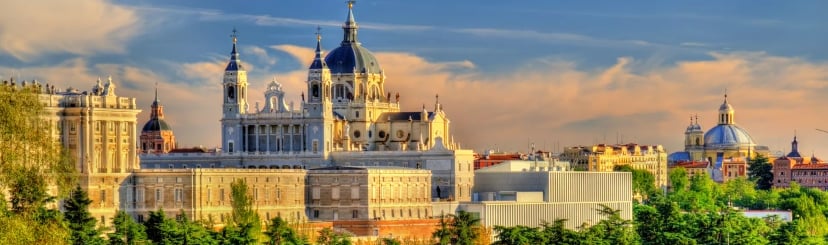
A Palace Quarter morning can be excellent because the area gives Madrid a different register from the museum-park spine. Plaza de Oriente sets a grander tone. The Royal Palace and Almudena area explain dynastic scale. Calle Mayor and Plaza de la Villa bring the city down to older civic proportions. The Austrias streets can then narrow the morning toward lunch without needing another big interior. That compression is valuable before a long meal: the morning has historical shape, but the walking does not have to sprawl.
The Palace interior belongs in this slot only under narrower conditions. It works when the lunch is nearby, when the group is genuinely interested in court history, and when the timing is clean enough that the visit does not become a countdown. If the Palace is just being added because “we should see it,” keep the morning outside and use the quarter instead. A guided exterior-and-neighborhood route can be more graceful before lunch than a ticketed interior that leaves everyone watching the clock.
The counterintuitive correction is that the Palace Quarter is overvalued as a universal pre-lunch base. It is central, but central is not the same as convenient. If lunch is near the Prado or Retiro, beginning at Plaza de Oriente can create a transfer you did not need. If lunch is in Salamanca, it can make the morning feel split between two Madrids. If the day already includes a serious lunch and an evening plan, the famous thing to cut may be the Palace interior, not the museum or the park.
Where the Palace Quarter shines is west-side coherence. A morning might begin at Plaza de Oriente, read the Royal Palace and Almudena from the outside, move through Calle Mayor and Plaza de la Villa, then finish near Plaza Mayor or the Austrias lanes. The group arrives at lunch with a sense of Madrid’s royal and civic layers, not with a list of stops. When the interior is the true priority, a Royal Palace Private Tour should be planned as the main event of the morning, not as an ornament before a meal on the other side of the city.
For couples, the Palace Quarter can feel atmospheric without becoming sentimental. The mistake is to treat atmosphere as a reason to overpack. Plaza de Oriente, the palace façade, a few Austrias streets and one well-paced approach to lunch can be enough. Adding a market nibble, another church interior and a cross-town taxi before a long meal does not make the day more romantic; it makes it less present.
The morning should be only a walk, not a museum, in these cases
The morning should be only a walk, not a museum, when lunch is the day’s main event, when the start is late, when the weather is draining, or when the group is already carrying travel fatigue. This is not a consolation plan. In Madrid, a precise walk can be the difference between arriving at lunch ready and arriving with the meal forced to repair the morning.
A walk-only morning is strongest when there is already plenty of cultural weight elsewhere in the trip. If you have a Prado afternoon another day, a Toledo or Segovia day on the itinerary, or a major evening plan, the pre-lunch morning should not pretend to be a miniature full day. Use the city as a transition. In Las Letras, that might mean Plaza de Santa Ana, Huertas, the Cervantes and Lope de Vega orbit, then a gentle turn toward the Prado or lunch. In the Austrias, it might mean Plaza de Oriente, Calle Mayor and Plaza de la Villa. Near Retiro, it might mean Puerta de Alcalá, the park edge and a controlled route toward Salamanca.
Premium spend does not help when the itinerary itself is overloaded; a premium lunch reservation does not fix arriving overheated or mentally tired. It also does not earn its cost if the group has spent the morning checking the time, negotiating taxis or trying to appreciate art after attention has already gone. The better luxury move is restraint: fewer transitions, clearer sequencing, and a morning that leaves room for the meal to matter.
The cut-first rule is ruthless but useful. Cut the second interior first. Cut the pre-lunch market stop next. Then cut the cross-city transfer that exists only because someone wanted to “see the Palace from the outside” or “just pop into Retiro.” A single well-shaped walk will usually beat three symbolic gestures before a long lunch. This is especially true for families, where every added stop creates a new chance for someone to need a bathroom, a snack, a rest or a negotiation.
A walk-only plan also protects the later day. Madrid often runs late, and a long lunch can stretch into the afternoon in a way that makes the evening feel shorter than expected. If the morning has been gentle, that stretch feels like pleasure. If the morning has been overstuffed, the afternoon becomes a recovery zone and dinner or evening plans start to lose their sparkle. The walk-only morning is sometimes the most adult choice: it trusts that the day does not need to prove itself before lunch.
Four route menus by where your lunch sits
The easiest way to choose is to start with the lunch address and then remove any morning that fights it. These route menus are not restaurant recommendations; they are geography checks that keep the morning from undermining the meal.
Lunch in Las Letras or near the Prado: choose the Prado, Thyssen or a Prado-edge walk. Do not start at the Royal Palace unless palace history is the point of the day. The best route narrows into Huertas, Plaza de Santa Ana or the lower literary streets without a last-minute transfer.
Lunch near Retiro or Salamanca: choose Retiro, a concise Thyssen or Prado visit, or a park-and-architecture walk from Puerta de Alcalá. Avoid the Palace Quarter unless you have a chauffeur plan and a reason strong enough to justify the reset. The Salamanca side rewards arriving composed; it does not need a dramatic west-side prologue.
Lunch in the Austrias, Ópera, Plaza Mayor or La Latina: choose the Palace Quarter or an Austrias walk. The Royal Palace exterior, Plaza de Oriente, Calle Mayor and Plaza de la Villa give the morning enough shape. Do not force Retiro unless the park is the point and you accept the transfer.
Lunch location still flexible: choose the morning first only if one cultural priority is non-negotiable. If the Prado is the point, keep lunch near the Prado, Las Letras or Retiro. If the Palace is the point, keep lunch west. If the meal is the point, choose a walk within easy reach of the table and stop adding attractions.
This is where a food-led Madrid day differs from a generic sightseeing day. The meal is not a reward after culture; it is one of the day’s major pieces of design. A separate food-and-wine arc can cover markets, tapas streets and evening rhythm in more depth, but a pre-lunch morning has a narrower job. For a broader day where meals and neighborhoods are the main structure, see our guide to a curated Madrid food-and-wine day.
What a private guide can actually improve before lunch
A private guide improves a pre-lunch morning by making it more selective, not busier. The guide’s value is in choosing the right territory, tightening the cultural thread, reading the group’s energy and ending the route before the lunch loses its pull. That is different from simply adding skip-the-line mechanics or squeezing in one more stop.
In a museum, the guide can make a ninety-minute experience feel complete by choosing paintings that connect to Madrid, monarchy, empire, collecting or Spanish identity, then stopping before visual fatigue sets in. In Retiro, the guide can turn a park morning into a city-reading walk without forcing everyone into another building. In the Palace Quarter, the guide can decide whether the interior is worth the clock pressure or whether the Austrias streets will do the job better.
For families and multigenerational groups, this can remove the friction that usually appears just before lunch. Someone walks slower. Someone loses interest in a gallery. Someone wants to know why there is not time for the Palace if it is famous. A private guide can absorb those questions and reshape the route without turning the morning into a committee meeting. That is the comfort advantage that matters: fewer micro-decisions for the travelers.
Premium spend helps when it buys judgment, pacing and clean transitions. It helps when a guide builds the morning around the lunch anchor, when a driver prevents an unnecessary heat or mobility drain, or when the route is adjusted for older parents, children or celebration timing. It does not help when it simply adds another entrance, another vehicle movement or another prestige stop that makes lunch feel late.
If your Madrid stay is food-led, a private morning can also be paired with a later tapas or wine route without making lunch compete with dinner. That does not mean grazing before the meal; it means keeping the pre-lunch window disciplined and saving food exploration for the right part of the day. For travelers who want that arc, Tapas Private Tours can belong on a different evening or a lighter day, not necessarily before the long lunch.
Orange Donut Tours can build a Madrid morning around the lunch you already care about: one focused museum, Retiro, the Palace Quarter or a walk-only plan that protects the meal and the rest of the day. Inquire now
FAQ
What is the best Madrid morning before a long lunch?
The best default is one focused museum if lunch is near the Prado, Retiro, Las Letras, Atocha or Salamanca. Choose Retiro if the group needs air and appetite protection, and choose the Palace Quarter if lunch is west around the Austrias, Ópera or Plaza Mayor.
Is the Prado too much before a long lunch?
The Prado is not too much before lunch if it is tightly edited. A short, themed Prado visit can be ideal before a Las Letras or Prado-side lunch, but a broad attempt to cover the museum will drain attention and appetite.
When is Retiro better than a museum before lunch?
Retiro is better when the meal is the day’s emotional center, when the weather favors an open-air route, when the group includes children or older parents, or when everyone has already had enough museum time elsewhere in the trip.
Should I visit the Royal Palace before a long lunch in Madrid?
Visit the Royal Palace before lunch only if the meal is nearby or if palace history is the main priority. If lunch is near the Prado, Retiro or Salamanca, the Palace Quarter often creates a transfer that weakens the morning.
Should the morning ever be only a walk?
Yes. A walk-only morning is the right choice after a late start, in draining heat, on a first day after travel, before a major lunch, or when the group needs a calmer rhythm more than another ticketed stop.
How does lunch location change the pre-lunch plan?
Lunch location decides which side of central Madrid is efficient. Prado, Retiro, Las Letras and Salamanca favor one museum or Retiro; Austrias, Ópera, Plaza Mayor and La Latina favor the Palace Quarter or a west-side walk.
Should we do a market or tapas stop before a long lunch?
Usually no. A coffee or small bite can help, but a full market wander or tapas preview often spoils the appetite that made the long lunch worth planning around.
Can a private guide make a pre-lunch morning more relaxed?
Yes, when the guide edits rather than adds. The value is in choosing the right route, limiting museum fatigue, managing family or group energy, and delivering you to lunch without a last-minute logistics scramble.
If you’re interested in any private tours of Madrid, please reach out to us.



 So if you are looking for the absolute best in Madrid & surroundings with authentic local fully-licensed native guides whose English you can actually understand and with an exclusive and amazingly fun itinerary













