A Tailored Madrid Park-and-Palace Day for a Luxury Stay: Royal Palace, Retiro and Cibeles Without Museum Overload

Updated
The best tailored Madrid park-and-palace day for a luxury stay is Palace first, Cibeles as the civic hinge, Retiro as the reset, and no third museum unless art is the trip’s main reason. This works because Madrid’s west-to-east rhythm gives you the heaviest interior first, then uses the Cibeles axis to move your eye and body toward the park without dropping you into the Prado-to-Reina Sofia corridor by default. The clearest exception is a traveler whose only Madrid day must include a masterpiece hit; in that case, add one tightly chosen museum, not a second palace-style interior or the whole Golden Triangle. The thesis is simple: Madrid feels most spacious when the Royal Palace carries monarchy, Cibeles carries civic Madrid, and Retiro carries recovery.
This is not a generic first-day itinerary, and it is not a disguised museum plan. It is a narrow answer for travelers who want Madrid’s grandeur, architecture, and local rhythm without spending the day indoors. The point is to make the Royal Palace feel substantial, let the Cibeles and Calle de Alcalá axis explain why Madrid’s center looks the way it does, and give Retiro enough deliberate time to change the pace before the evening. A private guide earns the day by joining those pieces into one story, not by adding another ticketed stop just because it is nearby.
The route decision in one screen: palace weight, Cibeles context, Retiro recovery
Use the palace-first route unless heat, sleep, or family energy argues strongly for a park-first morning. The route should be judged by three things: how much standing the Royal Palace will require, how smoothly you cross the city’s civic axis, and whether Retiro arrives early enough to feel like a deliberate reset rather than leftover scenery.
Best default route: Royal Palace and Plaza de Oriente first; Cibeles and Calle de Alcalá as the interpretive bridge; Retiro through the Puerta de Alcalá or northwestern edge; hotel return before dinner.
- Best for: first-time luxury visitors, couples, small private groups, and celebration travelers who want Madrid’s civic grandeur without museum overload.
- What it cuts: a third major interior, the all-day Golden Triangle sprint, and the mistaken idea that Retiro is only filler between more serious sights.
- What it preserves: enough attention for the palace, enough context for Cibeles, and enough physical looseness for an evening meal or private drinks.
Reverse route: Retiro first, Cibeles before or after lunch, Royal Palace later in the day.
- Best for: summer travelers, families with younger children, guests coming off a late arrival, or anyone whose morning energy is better spent outside.
- Tradeoff: the palace can feel heavier later, so the guide must narrow the interpretation and resist turning every ceremonial room into a lecture.
One-museum exception: Palace, Cibeles, Retiro, and one short museum chapter only when art is the explicit priority.
- Best for: travelers who would regret leaving Madrid without one museum and are willing to make Retiro shorter, not ornamental.
- Editorial limit: choose one museum thread. Do not force the Prado, Reina Sofía, and Thyssen into a day that is supposed to breathe.
For travelers who want the palace to feel anchored rather than rushed, Orange Donut Tours can shape the interior and exterior sequence through its Royal Palace Private Tour. That is useful not because the palace is hard to admire, but because it is easy to overstay. The difference between a satisfying palace visit and a draining one is not only the entrance time; it is whether the guide knows which rooms, courtyards, and exterior views should carry the story for your group.
Why the Royal Palace should usually come first
The Royal Palace should usually come first because it is the day’s largest concentration of interior attention, security rhythm, standing time, and ceremonial detail. Beginning there gives the heaviest stop your freshest focus and prevents the rest of the day from becoming a palace recovery exercise.
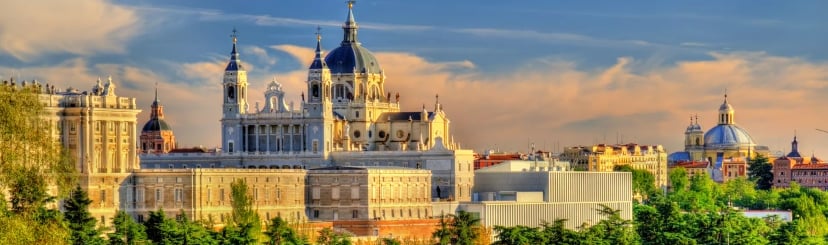
The local route logic is simple. The palace sits on the western side of the central sightseeing map, around Plaza de Oriente, Calle de Bailén, the Almudena Cathedral edge, and the open views toward the Campo del Moro side. That area feels expansive, but the visit itself is not light: interiors, guards, regulated movement, and visual density all ask more from the body than visitors expect. Couples may enjoy the grandeur and still find themselves quieter afterward. Families may start enthusiastically and then become restless once room after room competes for attention. Older parents may not mind walking, but they often feel the accumulated effect of standing.
This is why palace timing is not just a question of queues. It is an energy allocation decision. A guide can keep the palace meaningful by giving the visit a spine: monarchy, ceremony, Madrid’s move from older court city to capital scale, and the way the palace’s exterior dialogue with Plaza de Oriente sets up the rest of the day. Without that spine, the palace can become a long succession of impressive rooms. The result is not deeper understanding; it is attention fatigue before Cibeles and Retiro have had their chance to do different work.
The cut-first rule belongs here: if the morning palace visit runs long, cut an add-on museum before you cut the Retiro pause. The museum will compete with the palace for the same kind of concentrated indoor attention, while Retiro changes the physical and mental register of the day. This is the counterintuitive move many upscale first-stay itineraries miss. The more serious the palace visit becomes, the more valuable the park becomes afterward.
There is also a mood consequence. A palace-first day gives the group a shared reference point early, then gradually opens the city back out. The route moves from court ceremony to civic Madrid to air, trees, water, and looser conversation. If you reverse that without a reason, the palace may become the day’s final interior burden rather than its opening chapter. That can flatten the tone of the evening, especially when a late dinner, tasting menu, or family celebration still has to feel like part of the trip rather than a recovery obligation.
Cibeles should be the hinge, not the trapdoor into museum overload
Cibeles belongs in this day because it explains the city between palace and park, not because it gives you an excuse to bolt on every famous museum nearby. The overvalued default is to see Cibeles, notice the museum triangle on the map, and decide that a luxury day should include another major interior because it looks efficient. In practice, that is often where the day loses its shape.
The Cibeles axis is unusually useful because it makes Madrid legible without demanding another long entry sequence. From the palace side, the route can move through the central city toward Banco de España, Palacio de Cibeles, Calle de Alcalá, and the Puerta de Alcalá approach to Retiro. You are no longer only looking at royal Madrid; you are seeing the municipal, financial, and boulevard-scaled city that sits between the old court and the eastern park-and-museum spine. This is a better use of Cibeles than treating the fountain as a quick photo stop or as a waiting point before another ticketed site.
That distinction matters near the Prado-to-Reina Sofia corridor. The corridor is one of Madrid’s great cultural concentrations, but it is also the place where a museum-light day can accidentally become a museum-heavy day. The Prado, Reina Sofía, and Thyssen are close enough to tempt efficient planners, yet each asks for a different kind of attention. The result is not necessarily richer; it can be a sequence of entrances, bags, thresholds, rooms, and interpretive resets. A private Cibeles segment, by contrast, lets you connect power, urban planning, architecture, and hotel geography while staying outside long enough for the body to change pace.
Use primary sources when a museum truly belongs, but use them to choose, not to stack. The official Prado visit page (https://www.museodelprado.es/en/visit-the-museum), the official Reina Sofía visit page (https://www.museoreinasofia.es/en/visit), and the official Thyssen permanent collection page (https://www.museothyssen.org/en/collection/permanent-collection) are helpful when you need operational and collection context. They should not pressure you into turning a palace-and-park day into a three-museum achievement list. If art is the day’s main purpose, build an art day. If this is the park-and-palace day, keep Cibeles as the hinge.
That is also where Orange Donut Tours’ Cibeles and city-axis private tour can make the route feel composed. The value is not that every building gets a long explanation. The value is knowing when to pause, when to pass through, and how to make Cibeles clarify the transition from palace ceremony to Retiro ease. Without that judgment, Cibeles can become either a photograph with no consequence or a gateway to too much indoor touring.
Retiro earns its place when it is used as recovery, not scenery
Retiro belongs in this plan as a deliberate reset rather than filler, and that changes how you should route it. Do not treat the park as a generic green space after the “real” sights. Treat it as the moment that makes the palace, Cibeles, and the evening fit into one livable day.
The best Retiro portion is selective. Entering from the Puerta de Alcalá or Plaza de la Independencia side keeps the transition from Cibeles coherent. From there, a guide can decide whether the group needs the broad social energy around the Estanque, a quieter shaded line through the park, a visual pause near the Palacio de Cristal area when it suits the route, or a gentler loop that avoids turning the park into another checklist. The point is not to “see Retiro” in a completist sense. The point is to let Madrid’s formal center loosen its grip.
Retiro also solves a traveler problem that luxury itineraries often understate: after the palace, a group does not always need more content. It may need a different kind of attention. Children need space where they are not being corrected every few minutes. Older parents may need a walk that feels voluntary rather than obligatory. Couples may need a stretch where conversation returns naturally. Small groups may need a pause in which the guide can read whether the next hour should be lighter, more architectural, more food-oriented, or simply shorter.
This is why Retiro should not be placed at the end as a leftover. If the group reaches the park only after the palace, lunch, Cibeles, and a museum, Retiro becomes a tired walk through a famous name. If the group reaches it while the day still has elasticity, the park gives back energy. The route does not have to be long; it has to be chosen. Orange Donut Tours’ Retiro Park Private Tour is strongest when it avoids a generic park overview and instead uses Retiro to complete the palace-and-Cibeles story at a human pace.
Physically, Madrid does not exhaust this route with steep climbs the way Lisbon or Granada can. It drains through polished-floor standing, exposed plazas, traffic-side crossings, and boulevard distances that look small on a hotel map until the day is already half spent. The palace asks you to stand. Cibeles asks you to cross and orient. Retiro asks you to walk, but it can also absorb the accumulated stiffness if the route uses shade, benches, and a sensible entry point. That is the bodily logic behind the recommendation.
Three route scenarios for a private Madrid park-and-palace day
The best scenario depends on what would make your group regret the day: missing the palace’s weight, losing Retiro to fatigue, or leaving Madrid without one major art encounter. Choose the scenario by regret risk, not by how many famous names can fit on a map.
Scenario 1: Palace first, Cibeles midline, Retiro later
This is the cleanest version for a luxury first stay because the day moves from formal to civic to restorative. Begin with the Royal Palace and its immediate exterior context. Keep the interpretation focused enough that Plaza de Oriente, Calle de Bailén, and the palace interiors feel connected rather than separate. Afterward, transition across the center with Cibeles as the hinge, not as a loose scenic detour. Retiro then arrives at the right emotional moment: after the city has shown its courtly and civic scale, but before the group has become too tired to enjoy air and movement.
This scenario suits couples who want a refined day without art fatigue, families that need the heaviest content early, and small groups whose members have different cultural appetites. It also suits travelers staying near Retiro, Salamanca, Las Letras, Justicia, or the Paseo del Prado hotels because the day can end closer to their evening base rather than dragging them back across town after the park. The practical consequence is simple: your final hour can be a soft return instead of a transfer problem.
Scenario 2: Retiro first when heat, sleep, or family energy make interiors risky
A Retiro-first version works when the group is not ready for the palace’s interior weight. This can be the right call after a poor night’s sleep, a late arrival, a family breakfast that ran slowly, or a warm day when outdoor comfort is better earlier. Start with the park as a controlled, open-air beginning, use Cibeles to orient the route, then reserve the palace for a narrower, more purposeful visit later.
The tradeoff is that the palace must be edited more firmly. A late palace visit should not become a full interpretive marathon simply because the ticketed stop feels important. The guide has to set a clear arc before entering: what to notice, what to skip, how long the group can stand comfortably, and where the palace story connects back to what they saw near Cibeles and Retiro. This scenario works well for travelers who value ease over depth, but it breaks down if someone in the party expects the palace to be the day’s longest and most scholarly chapter.
Scenario 3: Palace plus one museum only when art is the reason
The one-museum exception is legitimate, but it should be honest. If a traveler would feel genuinely disappointed leaving Madrid without Velázquez, Goya, Guernica, or a Thyssen collection thread, then one museum can belong in the day. The price is not only time; it is the shortening of Retiro and the narrowing of Cibeles. The gain is a sharper art memory. The loss is the spaciousness promised by the park-and-palace premise.
When art is the deciding factor, use a separate decision lens rather than improvising at Cibeles. Orange Donut Tours’ guide to one private museum day in Madrid is the more appropriate next step. The key is not whether a museum is “worth it.” Of course the major museums are worth it under the right conditions. The question is whether they belong in this specific day without damaging the palace, park, and evening that the day was designed to preserve.
How much walking and transfer drag should you expect?
Expect a moderate walking day with several attention-heavy pauses, not a hike. The real drag comes from switching modes: palace interiors, open plazas, city-axis orientation, park walking, and hotel return logistics.
The palace area can feel deceptively open. Plaza de Oriente gives a sense of space, but the visit often involves slow movement and standing rather than brisk walking. The transfer toward Cibeles can be handled by car, taxi, or a guided central route depending on the group’s comfort, but it should not be treated as dead time. Done well, the cross-city movement explains how Madrid’s older ceremonial west connects to its more administrative and boulevard-scaled center. Done poorly, it becomes a blur of traffic and repeated “where are we going now?” questions.
Cibeles itself is a traffic-shaped space, so the best experience is not necessarily standing in the most obvious photograph position. The guide should choose a vantage that allows the group to see Palacio de Cibeles, Banco de España, the fountain, Calle de Alcalá, and the direction of Retiro without making everyone hover awkwardly at the edge of a busy intersection. This is one of those Madrid details that changes the day’s felt quality. A beautiful axis can feel elegant or irritating depending on where the group is asked to stand.
Retiro then changes the body’s rhythm, but only if the walk is edited. Gravel, sun, and distance can still tire people who were promised a gentle park. A family with a stroller, an older parent managing knee fatigue, or a couple dressed for a later lunch should not be marched through the park as if covering ground were the point. In a private day, the guide can choose whether the park segment should be a short visual reset, a shaded conversation walk, or a longer stroll that becomes the day’s emotional center.
The hotel return is the final piece of transfer logic. Ending near the Retiro or Salamanca side may be excellent for travelers staying east of the center; it may be less ideal for travelers based near the palace, Gran Vía, or the western side of the old center unless a vehicle is waiting at the right moment. That does not mean the route is wrong. It means the day should be planned as a west-to-east composition, not as a loop that pretends Madrid will fold neatly around every hotel address.
Spend for choreography, not trophy stacking
Premium spend is best used to remove the irritating seams of the day: timing, guidance, route transitions, and the moment when a tired group needs a clean return. It is weakest when it is used to add prestige stops that fight the day’s purpose.
A chauffeured element can be worthwhile when it prevents unnecessary backtracking, gives older parents or younger children a break between the palace and the eastern axis, or allows the guide to keep the day aligned with a lunch, hotel reset, or dinner plan. A vehicle can also be useful when the weather makes exposed crossings unpleasant or when a celebration group needs the day to feel composed rather than improvised. The value is not the car as a status symbol. The value is a smoother sequence when walking, taxi timing, and group energy would otherwise pull the day apart.
Premium spend does not help if it is spent on adding a third museum to a day that is already built around the Royal Palace, Cibeles, and Retiro. It also does not earn its cost when a car is used for every short movement simply because the trip is upscale. Too much chauffeuring can turn the day into a series of curbside waits, especially around central spaces where the better experience is to understand the axis on foot for a few minutes and then continue. A private vehicle should reduce strain, not replace the city’s connective logic.
The best use of Orange Donut Tours’ Luxury Chauffeured Madrid Private Tour is therefore selective. Use it for the hinges that matter: the palace-to-axis transition if the group is tired, the Retiro-to-hotel return if dinner timing matters, or a weather-adjusted version that keeps the day elegant without pretending Madrid’s center is a drive-by city. If the group is energetic and the weather is forgiving, spend more on expert guiding and less on unnecessary vehicle choreography.
This spend judgment is especially important for families and multigenerational groups. A family’s friction point is rarely “we did not pay for enough luxury.” It is usually “the adults wanted one more cultural stop after the children had already run out of patience,” or “the older guest could have enjoyed the day if the transfer had been placed thirty minutes earlier.” Good planning solves those problems before they become visible.
The private-guide value: keeping the sequence coherent without adding another museum
A private guide earns this day by deciding what not to add as much as by explaining what you do see. The guide’s work is to make the Royal Palace, Cibeles, and Retiro feel like one Madrid argument rather than three disconnected stops.
At the palace, that may mean narrowing the historical frame so the group remembers why the site matters, not only that it was grand. At Cibeles, it means transforming a traffic circle and civic façade into the city-center hinge between the palace and the park. In Retiro, it means reading the group’s energy and choosing the walk that completes the day rather than exhausts it. For families, that can prevent the late-day museum negotiation that turns adults into persuaders and children into resistors. For couples, it can make the route feel polished without becoming formal. For a celebration group, it can keep the day sufficiently light that the evening still feels like a continuation of the occasion.
This is the natural moment to design the day privately rather than overloading a public itinerary with more famous names. Orange Donut Tours can build the sequence around your hotel, walking tolerance, lunch rhythm, and whether the palace, park, or civic axis should carry the strongest emphasis. Explore the broader options through Private Tours in Madrid or Inquire now when you want the Palace, Retiro, and Cibeles to feel coherent without turning the day into another museum marathon.
Hotel base, lunch and dinner: the day should return you with appetite
The best version of this day ends with enough appetite, patience, and conversational energy for Madrid’s evening rhythm. That is one reason the museum-light choice is not a downgrade; it can make the whole stay feel more luxurious because the day does not spend every ounce of attention before dinner.
Hotel geography changes the final feel. Travelers based near Retiro or Salamanca benefit from an eastward finish because the park can lead naturally toward the hotel side of the city. Guests near Las Letras or the Paseo del Prado can use Cibeles and the park as a nearby civic-and-green sequence without feeling far from their base. Guests staying nearer the palace or Gran Vía need a clearer return plan, especially if the day includes a dressed-up evening. None of those bases is wrong, but each one changes whether the final transfer feels like a graceful close or a minor tax on the day.
Lunch should not compete with the palace for heaviness. A long, formal lunch immediately after the Royal Palace can work for some couples, but it may slow the day before Cibeles and Retiro have done their work. A more flexible lunch or a private pause near the axis can keep the afternoon alive. Food-and-wine travelers should remember that Madrid’s serious dining often belongs in the evening; a palace-and-park day is one of the better ways to arrive at dinner still engaged rather than depleted.
If dinner is the celebration anchor, keep the day clean and verify the restaurant details separately. Deessa at Mandarin Oriental Ritz and Smoked Room menus are examples of the kind of dinner planning that should be checked for current details, menus, and availability close to booking rather than assumed inside a sightseeing article. For a broader dinner lens, use Orange Donut Tours’ Madrid fine-dining guide after the day’s sightseeing shape is settled.
The trip mood shifts when this sequence is handled well. Instead of ending with the faint irritability of “one more interior,” the group usually has a clearer memory arc: royal scale in the morning, civic Madrid through Cibeles, green space in Retiro, then a return to the hotel with enough social energy for the evening. That is a luxury outcome even before any premium add-ons are considered.
A realistic park-and-palace day, paced by feeling rather than stopwatch
A realistic itinerary should read like a controlled arc, not a minute-by-minute performance. Use the following rhythm as a planning model, then adjust it around season, hotel base, and your group’s appetite for detail.
- Opening chapter: Begin at the Royal Palace and nearby exterior context. Keep the focus on the palace’s role in Madrid rather than trying to turn every room into an isolated highlight.
- Early correction: Leave before the palace has consumed the group’s full attention reserve. This is where private guiding matters: the visit should feel complete, not endless.
- Civic transition: Use Cibeles, Banco de España, Palacio de Cibeles, Calle de Alcalá, and the Puerta de Alcalá approach to explain the city’s center between palace and park.
- Retiro portion: Choose a selective park route that fits the group’s body, mood, and evening plan. The park should be felt, not conquered.
- Return: End with a hotel or dinner transfer that acknowledges where you are in the city. A day that finishes east of the center should not pretend the return is automatic for every base.
This sequence works because each piece changes the day’s texture. The palace gives weight. Cibeles gives orientation. Retiro gives air. A museum can be excellent, but in this particular plan it is the exception, not the proof of seriousness. The proof of seriousness is that the day still feels good at 7 p.m.
The clearest editorial no is this: stop forcing Madrid’s Golden Triangle into every upscale first-stay day. The museums are not lesser when you save them for the right morning; the palace-and-park day is not lesser when it refuses to become a museum day. Madrid rewards that restraint because its civic grandeur is not locked indoors. It runs through plazas, axes, façades, park edges, hotel geography, and the way the city’s evening arrives later than many visitors expect.
FAQ
Can you visit the Royal Palace, Retiro and Cibeles in one day without getting exhausted?
Yes, if the day is designed as a west-to-east sequence and does not add a third major interior by default. The tiring version is Palace, Cibeles, Retiro, plus a museum because it looks close on a map; the better version gives each stop a different job.
Should the Royal Palace or Retiro come first in Madrid?
The Royal Palace should usually come first because it demands the most interior attention and standing time. Retiro first is better only when heat, sleep, children’s energy, or arrival fatigue makes a lighter outdoor start the wiser call.
Is Cibeles worth a stop or just a photo point?
Cibeles is worth a stop when it is used to explain Madrid’s civic axis between the palace side of the city and Retiro. It is less useful as a quick photograph or as a trigger for adding every nearby museum.
Should I add the Prado to a Palace, Retiro and Cibeles day?
Add the Prado only if one major art encounter is a real priority and you are willing to shorten Retiro or simplify the palace. If the goal is a museum-light park-and-palace day, save the Prado for a separate museum morning.
Is Retiro enough for luxury travelers who do not want another museum?
Yes, when Retiro is treated as a deliberate reset rather than a generic park walk. A selective route through the park can make the palace and Cibeles feel more complete by changing the pace before the evening.
Does a chauffeur make sense for this route?
A chauffeur makes sense for selected hinges, especially palace-to-axis transfers, heat adjustments, older-parent comfort, family pacing, or a clean hotel return. It is not necessary for every short movement, and too much curbside waiting can weaken the day.
Which hotel areas make this day easiest?
Retiro, Salamanca, Las Letras, and Paseo del Prado bases make the eastward finish easier. Palace-side or Gran Vía bases can still work well, but they need a more deliberate return plan after Retiro.
Is this route good for families or older parents?
Yes, because it can place the heaviest interior first and use Retiro to change the pace before patience fades. The route should be edited around standing tolerance, shade, bathroom breaks, and the evening plan rather than treated as a fixed checklist.
If you’re interested in any private tours of Madrid, please reach out to us.



 So if you are looking for the absolute best in Madrid & surroundings with authentic local fully-licensed native guides whose English you can actually understand and with an exclusive and amazingly fun itinerary













