Lisbon Before Sintra: How to Keep the City Day Elegant Before the Palaces

Updated
The elegant Lisbon day before Sintra should be lighter than instinct suggests: choose one low-friction city anchor, keep the afternoon out of the steepest lanes, and finish near Chiado or Avenida da Liberdade rather than forcing a late hilltop flourish. That works because Sintra is not just another sightseeing morning; palace timing, transfers, and walking between terraces reward travelers who arrive rested. The clearest exception is a short stay where Lisbon itself matters more than the palace day: then Alfama or a castle route can lead, but the Sintra morning should move later or be simplified.
In Lisbon, elegance before Sintra is a routing choice: the city day must be judged by what it does to the next morning at the palaces. A useful local hinge is Cais do Sodré. From there, Belém is a lateral move along the Tagus, while Alfama asks the body to climb into stone lanes and descend again before dinner. That difference is easy to underestimate when planning from a map. It becomes obvious the next day when a guest is walking up to a palace entrance, managing timed admission, and trying to enjoy Sintra rather than recover from Lisbon.
If your Sintra day is already set, treat it as the anchor. Orange Donut Tours can shape the palace excursion through a private route such as Sintra and Cascais Private Tour, but the day before should still avoid proving how much Lisbon can contain. Travelers deciding where Sintra belongs in the whole stay can compare the broader rhythm in how many days in Lisbon with Sintra. This guide solves the narrower question: how to make the city day before the palaces feel composed, not crammed.
The ranked ladder for a Lisbon day before Sintra
The best pre-Sintra city day is not the most famous Lisbon day; it is the one that keeps the next morning clean. The ranking below uses four criteria: how much climbing the route demands, how many transfers it creates, how well it preserves an unhurried dinner, and whether the cultural payoff is strong enough to justify its physical cost. This is why Belém often outranks Alfama before Sintra even though Alfama may feel more classically Lisbon at first glance.
1. Belém riverfront, then a Chiado evening
This is the most elegant default before Sintra because it gives the day a major cultural anchor without adding hill fatigue. The monastery, riverfront, Monument to the Discoveries area, and the long Tagus perspective create a generous morning, while the return toward central Lisbon can be shaped into the Belém to Chiado evening transition rather than a second sightseeing campaign. It suits couples, multigenerational families, and food-and-wine travelers who want the city to feel substantial but not heavy.
2. Baixa, Chiado, and one carefully chosen viewpoint
This is the better choice when the traveler has already seen Belém or wants a central Lisbon day with shorter transfers. The key is restraint: Baixa, the lower edge of Chiado, and one controlled view can feel polished; Baixa, Chiado, Bairro Alto, Alfama, and the castle in one day can feel like a test. Choose the viewpoint for its route value, not for a checklist.
3. Avenida da Liberdade, Príncipe Real, and design-led Lisbon
This works when the day before Sintra is meant to feel like a city-life day rather than a monument day. Avenida da Liberdade gives a calmer hotel-and-boulevard base, Príncipe Real adds shops and garden pauses, and Chiado can hold the evening. It is less essential for first-time visitors who have not yet seen Belém, but it is strong for return guests or celebration travelers who prefer Lisbon to unfold through pace, meals, and taste.
4. Alfama and the castle, but only if the next morning is protected
Alfama before Sintra is the highest-risk option because it turns Lisbon’s charm into a physical load. It can still be right for travelers who are fit, deeply interested in older Lisbon, and not starting Sintra early. The mistake is treating Alfama as a harmless romantic add-on after a full day elsewhere. It is not harmless if tomorrow’s plan depends on energy, balance, and patience.
Why Belém often belongs before the palace day
Belém belongs before Sintra when you want a high-value Lisbon morning without borrowing energy from the palace excursion. The district gives you a coherent cultural story, river air, and a more horizontal walking pattern than the old hill neighborhoods. It also allows a natural start-to-finish arc: monument or monastery in the morning, riverfront breathing room, a measured return toward central Lisbon, and dinner in Chiado without turning the evening into another expedition.
The practical reason is more important than the atmosphere. Belém sits west of the historic center, so a private route can move along the river rather than repeatedly crossing the city grid. From Praça do Império, the riverfront, the Jerónimos area, and nearby gardens can be handled as a cluster. That saves decision fatigue. Instead of negotiating every block as a new climb or traffic crossing, the day has a clear geography. For private touring, that clarity is valuable: the guide can decide when to interpret, when to pause, and when to release the group into a calmer stretch.
There is also an authority point worth making because it affects sequencing. The Park and National Palace of Pena is an operationally sensitive visit, and the official Pena ticket page asks visitors to choose a day and time for palace entry; confirm the current rules on the official Pena ticket page (https://www.parquesdesintra.pt/en/plan-your-visit/tickets-palace-of-pena/) before you lock the wider plan. That one fact changes the previous day. A timed palace morning is less forgiving than a casual stroll in a city square. The day before should not end with everyone saying, “We can push through.”
Belém also supports a better mood. It lets Lisbon feel open rather than compressed. The Tagus, the long stone frontage around Jerónimos, and the westward view toward the 25 de Abril Bridge give travelers a sense of scale before the enclosed, forested movement of Sintra. The contrast matters. If Lisbon the day before is all steep lanes, crowded trams, and uphill dinner returns, Sintra begins as another endurance exercise. If Lisbon opens along the river and closes around Chiado, Sintra can feel like a new chapter.
For visitors who want Belém interpreted rather than merely seen, a focused private morning such as Belém and Jerónimos private tour can be a clean fit. Current visiting conditions should still be checked directly; the official Jerónimos page is the right place to confirm details before making the monastery the day’s anchor: official Jerónimos page (https://www.museusemonumentos.pt/en/museus-e-monumentos/mosteiro-dos-jeronimos-e-capela-de-sao-jeronimo). The larger planning point remains simple: Belém earns its place before Sintra when it is treated as the day’s main Lisbon anchor, not as the first stop in an overbuilt marathon.
The Belém to Chiado evening transition is the elegance hinge
The Belém to Chiado evening transition is the moment that keeps the day polished instead of merely efficient. A strong pre-Sintra plan does not just ask what you see before dinner; it asks how the group arrives at dinner. Coming back from Belém toward Chiado lets the day narrow gradually from riverfront space to central Lisbon texture. It avoids the harsh shift of trying to finish in a steep old quarter and then recover in time for a meal.
This transition works especially well for couples and celebration travelers because it gives the late afternoon a designed feel. Belém carries the monumental morning. The return east can include a pause rather than another ticketed stop. Chiado then becomes the evening platform: shops, cafés, theaters, and restaurants sit close enough to one another that the night does not require a second logistics plan. The group can change at the hotel if based near Avenida da Liberdade, or settle directly into a softer central route if based near Chiado.
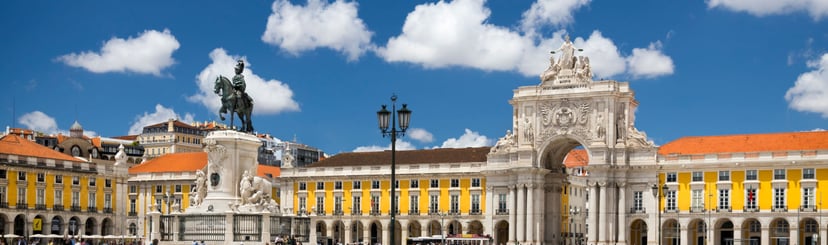
The micro-location matters. Praça do Comércio can be a handsome threshold, but it should not become the start of a new push through every central district. Baixa can flatten the transition, while Chiado adds a gentle lift and more evening texture. If the group has already spent the morning standing, the route should not ask them to climb from the river to Bairro Alto simply to prove they saw one more angle of the city. The win is not maximum coverage. The win is arriving at dinner with enough appetite, attention, and good humor to enjoy it.
For families, the same transition lowers friction. Children and older relatives often do better when the day has fewer ambiguous handoffs: one morning anchor, one calmer move, one evening zone. A private guide can read the group after Belém and decide whether Chiado should be a short orientation, a food-led wander, or merely the graceful place to end. That judgment is more useful than a rigid itinerary because the next day’s Sintra departure is not theoretical. It is already waiting.
The alternative is the overvalued pre-Sintra flourish: Belém in the morning, a central walk in the afternoon, Alfama at dusk, and dinner somewhere uphill. On paper it looks romantic. In real Lisbon conditions it often produces a late return, sore legs, and a next morning that starts with bargaining. The more discerning choice is to let the Belém to Chiado evening transition do less, but do it beautifully.
How to plan Lisbon before Sintra without making the palace day feel heavy
Plan Lisbon before Sintra by cutting the day at the first sign of duplication. If Belém gives you monumental Lisbon, do not add another major monument unless it solves a specific interest. If Chiado gives you the evening, do not add Bairro Alto simply because it is nearby on a map. If Avenida da Liberdade is your hotel base, use it as a quiet return valve, not as a reason to keep moving north and south all night.
The simplest test is this: will the added stop make tomorrow’s palace day better, neutral, or worse? A good lunch, a shorter transfer, or a guide’s explanation that helps you understand Portugal’s royal and maritime context can make Sintra richer. A second hilltop, a crowded tram ride, or a late-night uphill return usually makes the next morning worse. That is the difference between travel value and itinerary vanity.
Lisbon is particularly punishing when small extras stack up. Cobblestones slow the pace. Slopes change how long a “short walk” feels. Tram crowding can turn a scenic transfer into a standing-room squeeze. A single climb to a viewpoint may be memorable; three climbs in one day change how the body feels when it wakes. This is not about fragility. It is about respecting the city’s terrain before a day that already asks for attention, walking, and timing.
The city also changes the mood of a trip. A Lisbon day that ends with everyone slightly overheated, late, and unsure how far the hotel is can make the whole stay feel shorter. By contrast, a day that closes near Chiado or Avenida da Liberdade gives the impression of control. Travelers remember not only what they saw but how the plan felt around the edges: whether there was time to dress for dinner, whether a child had a pause before the next instruction, whether grandparents could enjoy the evening without calculating the walk back.
This is why the cut-first rule is so firm: cut the second hill before you cut the main cultural anchor. Belém plus Chiado is stronger before Sintra than Belém plus Alfama plus Chiado. Baixa plus one viewpoint is stronger than Baixa plus three viewpoints. If the day is becoming crowded, remove the element that increases climbing or late transfers, not the element that gives the day its story.
How hills change the next morning
Lisbon’s hills change the Sintra morning by turning yesterday’s romance into today’s resistance. The issue is not one steep street. It is the cumulative effect of uneven calçada, stair lanes, sloped viewpoints, and the repeated need to descend before you can transfer elsewhere. A traveler can feel perfectly happy at Miradouro de Santa Luzia at sunset and still feel the cost when the next morning begins with shoes, bags, ticket times, and a palace route.
Alfama before Sintra deserves particular care. It is one of Lisbon’s most rewarding neighborhoods, but its reward is inseparable from its terrain. Streets narrow. Surfaces shift. A route that begins around the cathedral and climbs toward viewpoints or São Jorge Castle asks for more balance and attention than a riverside Belém morning. That may be worth it on a day designed around old Lisbon. It is less sensible as an add-on before a palace excursion.
A private car can improve transfers, but it cannot erase the walking that makes Alfama Alfama. This is the counterintuitive correction many premium travelers need: the glamorous upgrade is not always the one that saves the day. A private car cannot fully compensate for a Lisbon day that overuses hills before Sintra. If the route is built around repeated climbs, the vehicle only softens the gaps between them. It does not make stair lanes flatter, cobblestones smoother, or a late uphill dinner return disappear.
The consequence appears at Sintra in several ways. The group moves more slowly at the first palace approach. Photo stops feel more like interruptions than pleasures. The guide has to spend attention managing energy instead of deepening the visit. A child who might have been curious becomes negotiation-prone. An older parent who could have enjoyed the palace interiors starts conserving steps. A couple who imagined a romantic day may find the morning mood already thinned.
That does not mean avoiding hills altogether. Lisbon without any elevation can feel under-read. The point is dosage. Before Sintra, choose one height change if it genuinely improves the day. Do not build a route that repeatedly climbs from Baixa to Chiado, from Chiado to Bairro Alto, from Alfama to the castle, and then asks the group to be bright for a timed palace visit the next morning. The better plan leaves some Lisbon drama for after Sintra, when there is no palace departure to protect.
When Alfama should wait until after Sintra
Alfama should wait until after Sintra when the palace day starts early, when older parents or young children are traveling, when the group wants a special dinner the night before, or when the Lisbon day already includes Belém. This is not a criticism of Alfama. It is a sequencing judgment. Alfama is better when it can be given its own descent, its own pauses, and a finish that does not threaten the next morning.
The strongest case for postponing Alfama is a first Sintra visit built around Pena or another timed palace anchor. The official logistics of palace entry reward punctuality and composure. If the previous evening ran late because the group chased views around Portas do Sol, squeezed into a tram, or walked down from the castle in dress shoes, the Sintra day inherits that cost. It is rarely worth it.
Another reason to wait is interpretive quality. Alfama is not just a view district. It holds layers of older urban fabric, religious sites, Fado associations, tiled corners, and routes that make sense when walked with patience. When it is treated as a twilight add-on before Sintra, it can become a blur of pretty stairs and mild fatigue. After Sintra, it can be designed as a slower old-city morning or a descending route that starts high and ends lower, which is far kinder to the body.
There are exceptions. Fit travelers with a deep interest in Lisbon’s oldest quarters may choose Alfama before Sintra if the day is otherwise light and dinner is near the hotel. A private route can start high, avoid unnecessary backtracking, and descend intelligently. Even then, the route should not add Bairro Alto and multiple viewpoints after Alfama. One old-city focus is enough. A private Alfama route such as a castle-and-neighborhood visit is best used when it is the day’s identity, not when it is competing with Belém, Chiado, and a next-day palace plan.
The clearest editorial call is this: if Sintra is the emotional centerpiece of the next day, do not spend the previous evening proving you can still climb. Put Alfama after Sintra, or give it a dedicated route on another day. The city will feel more generous when its most vertical quarter is not forced to serve as a prelude to another demanding excursion.
Where Avenida da Liberdade and Chiado fit before Sintra
Avenida da Liberdade and Chiado fit before Sintra as recovery zones, not as extra checklists. Avenida da Liberdade works as a calm hotel base and a late-day release point. Chiado works as an elegant evening district with enough texture to feel like Lisbon but enough proximity to avoid a complicated finish. Together, they are the places that keep the city day from fraying after Belém or a central walk.
Avenida da Liberdade is useful because it gives travelers a straight, legible corridor. After a private Belém morning or a central Lisbon afternoon, returning to a hotel along the avenue can reset the group before dinner. That matters for celebration travelers and families who care about the evening as much as the monuments. It also helps small groups with different stamina levels: one person can rest, another can shop lightly, and the plan does not collapse.
Chiado is different. It is not flat, but it is concentrated. The lower Chiado and Baixa-Chiado edge can hold a refined late afternoon without asking the group to roam across the entire old center. It works well when the city day needs one last layer of Lisbon: a literary note, a design stop, a café pause, or a short food-led orientation. The important thing is to stop before the route tips into Bairro Alto by inertia.
For travelers still choosing a base, the distinction matters. A hotel near Avenida da Liberdade can make the night before Sintra calmer because the return is psychologically simple. A Chiado base can be excellent when the group values evening access and does not mind some slope. A more detailed base-choice guide lives here: where to stay in Lisbon for a comfort-first trip. For this narrower pre-Sintra question, the practical answer is that both districts can work if they are used as containment, not expansion.
The mistake is believing that a premium hotel district automatically solves the route. It does not. A beautiful base helps with recovery, but the day’s sequence still matters. If the group spends the afternoon climbing in Alfama, crosses back for dinner in Chiado, and returns late to Avenida da Liberdade, the base has become a rescue point rather than a planning advantage. Use the base to shorten the evening, not to justify a longer day.
What to keep light before Sintra
Keep food, shopping, museums, and viewpoints light before Sintra unless one of them is the day’s chosen anchor. Lisbon rewards appetite, but the night before a palace day is not the time to turn every pleasure into a commitment. A long lunch, a heavy tasting rhythm, a deep museum session, and a hilltop sunset can each be reasonable alone. Together, they create a day that looks luxurious on paper and feels overmanaged in practice.
Food should support the route rather than dominate it. A good lunch near Belém or Chiado can give the day shape. A late, elaborate lunch followed by another evening meal can flatten the next morning. Food-and-wine travelers do not need to lower standards; they need to choose timing. If the Sintra departure is early, let the previous dinner be excellent but not punishing. Keep the wine pacing civilized. Avoid turning the evening into a second destination if the transfer back to the hotel will be slow or uphill.
Shopping should also be selective. Avenida da Liberdade, Chiado, and Príncipe Real can all tempt travelers into “just one more stop.” Before Sintra, the better approach is a short, curated thread: one design interest, one boutique cluster, or one practical purchase. Do not let shopping become an unplanned standing marathon. The body does not distinguish between standing in a palace queue, standing in a boutique, and standing on a tram. It only knows the total.
Museums are a similar question of identity. A small, focused cultural stop can be valuable if it connects to the traveler’s interests. A major museum inserted after Belém because there is technically time often drains the day’s elegance. If art is the priority, build a Lisbon art day separately. If Sintra is tomorrow’s centerpiece, the previous day should keep interpretation crisp and leave room for conversation, digestion, and sleep.
Viewpoints require the strictest discipline. Lisbon’s miradouros are seductive because each one appears to promise a slightly different city. Before Sintra, one view is enough. Choose the one that belongs naturally to the route. Do not chase view after view from Santa Luzia to Graça to São Pedro de Alcântara. That is how a graceful city day becomes a staircase tour disguised as romance.
When a chauffeur-supported day earns its value
A chauffeur-supported Lisbon day earns its value when it reduces transfer drag without encouraging a bloated itinerary. The best use is not to keep adding stops. It is to make the chosen day cleaner: hotel pickup, a smoother move to Belém, less waiting between districts, a controlled return to Chiado or Avenida da Liberdade, and fewer negotiations over taxis, trams, or walking routes when the group is already warm or tired.
The value is strongest for multigenerational families, celebration travelers, small private groups, and visitors with premium dinner plans the night before Sintra. In those cases, the chauffeur is not merely a comfort signal. It changes the day’s rhythm. A guide can interpret Belém, manage the return toward central Lisbon, and adjust the pace if the group needs a pause. The car keeps the day from splintering into separate logistics problems.
It also helps when the hotel base and city plan do not naturally align. A traveler staying on Avenida da Liberdade may want Belém in the morning, Chiado in the late afternoon, and a hotel reset before dinner. Without support, that can become a series of small decisions: ride-share timing, traffic judgment, whether to walk from Baixa, where to meet after shopping, whether the older parent should wait. With a private guide and chauffeur, those decisions are absorbed into the plan rather than passed to the traveler every hour.
The spend does not earn its cost when the route is already compact and gentle. If the day is simply lower Chiado, Baixa, lunch, and a short walk back to the hotel, a chauffeur may add formality without much practical gain. Premium spend also does not help when the real problem is overambition. If the plan insists on Belém, Alfama, the castle, Príncipe Real, Bairro Alto, and a late dinner before Sintra, paying more will make the day more comfortable in pieces but not wiser as a whole.
This is where a private planner’s restraint matters. Orange Donut Tours can connect the Lisbon city day with the next-day palace excursion so the two feel designed together rather than purchased separately. A chauffeur-led option such as chauffeured Lisbon private tour is most compelling when it protects the evening before Sintra: fewer rough transfers, fewer late surprises, and a guide who knows when not to add another hill. To discuss a private Lisbon day that keeps the Sintra morning intact, Inquire now.
A polished sample flow for the day before the palaces
The most reliable sample flow is Belém as the main morning, a calm central return, Chiado as the evening stage, and no late old-city climb. Start with a hotel pickup or guided transfer that does not require the group to solve transport before the day has begun. Use Belém for the main cultural context, especially if the travelers care about Portugal’s maritime age, Manueline architecture, or the city’s river identity. Keep the route clustered around Praça do Império and the riverfront rather than scattering the morning across disconnected stops.
Late morning should include a pause that feels like part of the plan, not a delay. This might be a short garden break, a pastry moment, or simply time to stand by the river and let the morning breathe. The point is not to create dead time. It is to prevent the day from becoming all instruction. A private guide’s judgment matters here because the right pause depends on the group: children need a different reset than a couple celebrating an anniversary; older parents need a different pace than a group of friends who wants more interpretation.
Lunch should sit either in Belém if the group wants to keep the morning contained, or closer to Chiado if the day is moving back east. Avoid a lunch that forces a new district purely for reputation. The day before Sintra is not the moment to chase a restaurant that creates a transfer puzzle unless the meal itself is the purpose of the day. The best lunch placement supports the afternoon’s shape.
The afternoon should resist the urge to “use” every remaining hour. A short Baixa-Chiado orientation, one design or shopping thread, or a hotel reset can all be correct. What is not correct is adding Alfama just because the group has not seen it yet. Save Alfama for after Sintra if the palace day is important. The city will not vanish, and the next morning will be better.
Evening belongs near Chiado or the hotel base. Let the day close in a district where dinner, a short walk, and the return are all easy to understand. That ending is not less ambitious; it is more adult. The traveler gets a Lisbon day with shape, contrast, and pleasure, and Sintra receives the rested attention it deserves.
How this changes for couples, families, and small groups
Couples should prioritize mood continuity before Sintra. The risk for couples is not usually logistics chaos; it is over-romanticizing the hardest parts of Lisbon. A sunset hill, a Fado district, a late dinner, and an early palace departure can sound magical until the next morning begins. For couples, Belém to Chiado often wins because it gives scale, culture, and evening elegance without turning romance into recovery.
Families should prioritize fewer transitions. Children may enjoy Belém because the riverfront gives space and the morning can be explained through ships, stone, explorers, and architecture without making the day feel like a lecture. The key is not to add a second demanding neighborhood in the afternoon. Families are often better served by a short Chiado or hotel reset than by a heroic old-city walk. If grandparents are included, the case for avoiding pre-Sintra hills becomes even stronger.
Small groups should prioritize agreement. In a group of four to eight, the hidden cost of an overloaded Lisbon day is not just tired legs; it is the time spent reconciling different speeds and preferences. One guest wants another view, another wants a café, another wants shopping, and another is already thinking about tomorrow. A private guide can hold the day together by making the route’s logic visible. The group accepts a cut more easily when the reason is clear: the palace day will be better.
Food-and-wine travelers should prioritize the evening’s aftereffect. Lisbon is an excellent city for a memorable meal, but the night before Sintra should not be treated as a final banquet unless the next morning is adjusted. A refined dinner near Chiado or Avenida da Liberdade can work beautifully. A late tasting rhythm followed by an early departure and palace walking is a mismatch. The most elegant food choice is the one that still lets breakfast feel possible.
Celebration travelers should prioritize the hotel reset. Anniversaries, birthdays, and family milestones often need time to dress, pause, and feel the occasion. That is another reason the Belém to Chiado evening transition works well: it can return the group toward the hotel or an elegant central dinner without asking everyone to improvise. A celebration day loses polish when the final hour is spent negotiating tired transfers.
What not to force if the Lisbon stay is short
Do not force every Lisbon icon into the day before Sintra when the stay is short. The most common mistake is treating the pre-Sintra day as the last chance to see the city and therefore loading it with Belém, Alfama, Baixa, Chiado, Bairro Alto, and one or two viewpoints. That instinct is understandable. It is also the reason many palace days begin with less enthusiasm than they deserve.
If there is only one full Lisbon city day before Sintra, choose the version of Lisbon that best supports the rest of the trip. First-time visitors usually do well with Belém plus a central evening because it gives historic weight and urban pleasure without exhausting the group. Travelers who care more about old neighborhoods than monuments may choose Alfama instead, but then Belém should wait. The tradeoff should be explicit. The weak version is trying to do both fully.
If the short stay includes an arrival day, avoid moving the hardest Lisbon walking to the afternoon after a flight and then saving Sintra for the next morning. That sequence often looks efficient and feels harsh. A riverfront arrival, a quieter dinner, and a fuller city day after Sintra may be wiser. The point is to place the demanding walking where the body can actually enjoy it.
If the stay is only two nights, decide what memory you want to protect. A palace day in Sintra can be the standout memory if the day before is measured. A Lisbon old-city day can be the standout memory if Sintra is simplified. What rarely works is asking both to be maximal. Luxury, in this context, is not the number of stops. It is the absence of regret at the moment when the group should be enjoying the main event.
For travelers comparing day-trip choices more broadly, a separate guide covers the larger decision across Sintra, Cascais, Évora, Colares, and Óbidos: which private day trip from Lisbon fits a bespoke city stay. For this article’s narrower question, the answer remains disciplined: keep the Lisbon day before Sintra selective, legible, and kind to the next morning.
The final planning judgment
The best Lisbon day before Sintra is a composed city day, not a compressed city survey. Belém usually wins because it provides cultural substance with less vertical strain, and the Belém to Chiado evening transition gives the day a graceful close. Avenida da Liberdade works as a recovery base. Chiado works as a dinner-and-evening district. Alfama is magnificent, but it should often wait until after Sintra unless it is the day’s primary focus and the palace morning is protected.
The most important planning question is not “Can we fit it in?” It is “What will this do to tomorrow?” That question changes the answer. It makes one viewpoint more attractive than three. It makes a riverfront morning more useful than a hill-heavy afternoon. It makes a chauffeur valuable when it simplifies transfers, and unnecessary when the itinerary is already compact. It makes a private guide’s restraint as important as knowledge.
For discerning travelers, the polished choice is rarely the loudest itinerary. It is the one where the city day has a clear center, the evening does not fray, and Sintra begins with the group ready to pay attention. In Lisbon, that usually means Belém by day, Chiado or Avenida da Liberdade by evening, and Alfama saved for a moment when its hills can be enjoyed rather than endured.
FAQ
Should I visit Belém the day before Sintra?
Yes, Belém is often the best Lisbon anchor before Sintra because it gives cultural depth, riverfront space, and a lower-climb route than Alfama. It works best when it is the main morning plan and the evening returns toward Chiado or Avenida da Liberdade.
Is Alfama a bad idea before a Sintra day trip?
Alfama is not a bad idea in general, but it is often a poor fit before an early Sintra palace day. Its slopes, cobblestones, stair lanes, and late uphill returns can make the next morning feel harder before the palace visit has even begun.
What should I keep light in Lisbon before Sintra?
Keep hills, long meals, major museums, shopping, and viewpoints light unless one of them is the day’s clear anchor. The first thing to cut is the second hill or extra viewpoint, not the main cultural stop that gives the day meaning.
Where should dinner be the night before Sintra?
Dinner is usually best near Chiado, Avenida da Liberdade, or the hotel base. The goal is not simply a good table; it is a good table that does not create a late, tiring return before a timed palace morning.
Does a private car solve Lisbon hill fatigue before Sintra?
No. A private car can make transfers smoother and reduce waiting, but it cannot fully solve a route that overuses Lisbon’s hills. It earns its value when it simplifies a restrained plan, not when it enables an overpacked one.
Is Chiado or Avenida da Liberdade better before Sintra?
Chiado is better for an elegant central evening with restaurants, cafés, and short walks close together. Avenida da Liberdade is better as a calm hotel base and recovery corridor. Both work well before Sintra when they shorten the evening rather than expand it.
Can I do Belém and Alfama on the same day before Sintra?
You can, but it is usually not the most elegant choice before an important Sintra day. Belém and Alfama both deserve attention; combining them often creates a long, uneven day with more transfers and climbing than the next morning needs.
When should Alfama wait until after Sintra?
Alfama should wait until after Sintra when the palace day starts early, when the group includes older parents or children, when the previous evening includes a special dinner, or when Belém is already the main Lisbon anchor.
If you’re interested in any private tours of Lisbon, please reach out to us.


 So if you are looking for the absolute best in Lisbon & surroundings with authentic local fully-licensed native guides whose English you can actually understand and with an exclusive and amazingly fun itinerary













