Córdoba When the Alcázar Is the Recovery Stop: Gardens, River Air and the Monument to Skip

Updated
The verdict is yes: the Alcázar of the Christian Monarchs works after the Mezquita-Catedral when you treat it as a recovery stop, not as a second deep monument. It works in real Córdoba conditions because the route slips from the Mezquita side toward Campo Santo de los Mártires, then toward Puerta del Puente and the river, without asking you to cross half the city or climb into another district. The clearest exception is a heavy Mezquita morning: if the visit has already stretched into the Judería, lunch, heat, and a late train, skip the Alcázar rather than buying your way into a tired afternoon.
The thesis is simple and very Córdoba-specific: the Alcázar gardens after the Mezquita are valuable because they change the body language of the day, while the wrong extra monument changes it back into a checklist. Start with the Mezquita-Catedral as the intellectual center of the day, then let the Alcázar gardens, the nearby Royal Stables edge, the Roman Bridge air, and a controlled river pause soften the afternoon. If the Mezquita is the reason you are in town, build that visit properly through the Mezquita-Catedral Skip-the-line Private Tour rather than trying to compensate later with more interiors.
Use the official Mosque-Cathedral site (https://mezquita-catedraldecordoba.es/en/) for current visitor information before you lock timing, because the main monument sets the rhythm for everything that follows. Orange Donut Tours’ planning judgment is not that every first-timer must add the Alcázar. It is that the Alcázar can be the right second move when the guide, pace, shade, and exit route make the afternoon feel shorter than the map suggests.
Is the Alcázar worth it after the Mezquita-Catedral?
Yes, the Alcázar is worth it after the Mezquita-Catedral when the goal is decompression, garden air, and one more layer of Córdoba without forcing another museum-length stop. The Alcázar of the Christian Monarchs sits close enough to the Mezquita that the transfer itself does not break the day. That proximity matters: after a morning inside the Mezquita-Catedral, you do not need a driver reset, a station-side detour, or a new neighborhood thesis. You need a second place that feels different quickly.
The Alcázar’s strongest role is not to compete with the Mezquita. That is the first planning mistake. The Mezquita-Catedral carries the architectural, religious, and emotional density of the day. It needs concentration. The Alcázar should not be asked to match that density. It should relieve it. A better Alcázar visit after the Mezquita spends less energy on proving the site’s importance and more energy on using the gardens, water lines, terraces, and open sky to give the group a different pace.
The non-obvious route cue is the hinge around Campo Santo de los Mártires. Many visitors think of the Mezquita, the Judería, and the river as separate clusters; in practice, this southwestern edge lets a guide move from sacred interior to garden stop to river air without returning through the busiest souvenir lanes. That is why the Alcázar can work for couples, families, and older travelers when a more famous add-on would feel like a push.
The correction is that the Roman Bridge is not the monument you should automatically “do” after the Alcázar. The bridge is best used as air. The full bridge-plus-tower impulse often turns a calm ending into another interior decision. If you have already had the Mezquita and Alcázar, the extra monument to cut first is the Calahorra Tower at the far side of the Roman Bridge. Keep the bridge as a river moment; do not turn it into a museum obligation unless Roman or medieval defensive context is the point of your day.
That judgment also keeps the Alcázar from being oversold. A private Alcázar visit can be excellent, especially with the Alcázar of the Christian Monarchs Private Tour, but it is not mandatory for every first-timer. The right question is not “is the Alcázar important?” It is “does this second stop improve the rest of the day after the Mezquita?” When the answer is yes, it is usually because the gardens and river edge change your pace, not because you need another set of rooms.
A ranked ladder for the post-Mezquita afternoon
The easiest way to plan the afternoon is to rank the recovery value, not the fame of the monument. Córdoba’s historic core is compact, but compact does not mean effortless. A short walk through sun, stone, tight lanes, and decision-heavy heritage can feel longer than a larger city’s shaded transfer. Use this ladder when your Mezquita-Catedral visit is already the anchor and you are deciding what to add, trim, or refuse.
- First choice: Mezquita-Catedral, Alcázar gardens, and river air. This is the best recovery route when the group still has curiosity but no appetite for another dense interior. The Alcázar gives structure, the gardens change the mood, and the Roman Bridge edge supplies space. You can approach the bridge, take in the Guadalquivir, and stop before the far-side tower turns the pause into another visit.
- Second choice: Mezquita-Catedral and Alcázar only. Choose this when heat, mobility, children, or a dinner reservation make the river extension feel like one step too many. This still gives you the mood change after the Mezquita without asking the group to cross, return, and then reposition for lunch or hotel time.
- Third choice: Mezquita-Catedral, lunch, and a hotel or shaded reset. Choose this when the Mezquita morning has been serious and the group is no longer absorbing context. This is not a failure. It is often the more elegant choice for celebration travelers or food-and-wine travelers who want to arrive at dinner alert rather than overeducated.
- Fourth choice: Mezquita-Catedral, Alcázar, Roman Bridge, and Calahorra Tower. Choose this only when the tower’s story matters to the group. Do not add it just because you have crossed the bridge. The bridge itself can be the payoff.
- Wrong-day choice: Mezquita-Catedral, Alcázar, and Medina Azahara. Save Medina Azahara for a separate, intentional half-day unless your whole Córdoba plan is built around archaeology and caliphal scale. Adding it after a full Mezquita and Alcázar sequence often steals more from the day than it gives back.
The firm editorial call is this: the premium decision may be to cut Calahorra Tower, not to add another credentialed stop. If the river air is doing the work, let it do the work. The Roman Bridge can be folded into a smoother private route through the Roman Bridge and Calahorra Tower Private Tour when the tower belongs, but the wiser version after a full morning often uses the bridge as a visual and physical release.
Why the gardens change the mood rather than just add another stop
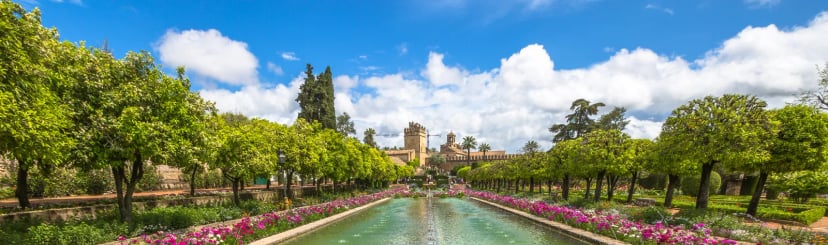
The Alcázar gardens change the mood because they shift the day from interpretation to orientation. After the Mezquita-Catedral, travelers have usually spent a long stretch looking up, comparing layers, listening closely, and adjusting to the scale of one of Spain’s most demanding interiors. The Alcázar gardens ask something different: walk, pause, look along water, feel the walls around you, and let Córdoba become three-dimensional again.
That mood shift is not decorative. It has planning consequences. A group that is still engaged but mentally full can handle gardens better than another sequence of rooms. Children can move without being asked to whisper through every threshold. Older parents can take smaller interpretive doses. Couples can keep the afternoon from becoming a lecture marathon. Celebration travelers can preserve the sense that the day is unfolding rather than being completed under pressure.
The Alcázar also changes how the city sounds. The Mezquita’s interior can absorb attention so completely that the old town outside feels abrupt afterward: tour groups, narrow Judería lanes, lunch decisions, and the sun reflecting off pale stone. In the gardens, the rhythm becomes more legible. Water, shade, open axes, and the possibility of leaving toward the river make the stop feel like a designed exhale rather than a second demand.
This is where guide quality matters. A less skilled route turns the Alcázar into a compressed history summary after an already rich morning. A stronger guide reads the group. If the Mezquita has landed deeply, the Alcázar explanation should be selective. If the group has missed political context, the Alcázar can supply it briefly. If the heat is rising, the guide should move the group through the most restorative portions rather than proving that every corner has been covered.
There is one more reason the gardens work: they let Córdoba’s river geography enter the day without forcing a river itinerary. From the Alcázar side, the Roman Bridge is close enough to become a short continuation, not a new plan. That keeps the day locally coherent. You are not jumping from monument to monument; you are letting the city’s southern edge carry you from sacred interior to royal garden to open river.
The monument to skip after the Alcázar is Calahorra Tower
When the day is already full, skip Calahorra Tower after the Alcázar and keep the Roman Bridge as river air. This is the cut that most often improves the afternoon because it removes the bridge-crossing obligation while keeping the view, the breeze, and the sense of arrival at the Guadalquivir. In a tighter day, the tower’s far-side position changes the physical equation more than visitors expect.
The Roman Bridge is seductive because it looks simple. It is linear, famous, and easy to understand from the Mezquita and Alcázar side. But once you turn the bridge into a full crossing, then add tower time, then return or reposition, the river pause becomes a mini-expedition. That can be worthwhile at the right time of day, especially for travelers who care about Córdoba’s Roman and medieval layers. It is less worthwhile when the group has already absorbed the Mezquita-Catedral and walked the Alcázar gardens in the same heat window.
The bridge’s best post-Alcázar role is sensory. Step toward Puerta del Puente, let the group see the long line across the Guadalquivir, and decide whether the far bank is helping or merely extending the day. If energy is good, walk part of the bridge or complete the crossing without adding the tower interior. If energy is thin, the near-side river edge is enough. The point is to use the river as a release valve, not as a contract.
This is also why the tower is a better cut than the bridge itself. Cutting the bridge removes the air. Cutting the tower removes the obligation. The visual payoff remains, the body load drops, and the afternoon retains a sense of finish. For many private travelers, that is the difference between returning to the hotel or lunch with appetite and returning with the flat, slightly overfull feeling that comes from one stop too many.
Calahorra Tower belongs when it is the subject, not the leftover. Build it into a Roman Bridge and river-context route when the group wants fortified architecture, the far-bank perspective, or a specific Córdoba history thread. Do not tack it on because “we are already there.” Córdoba punishes that phrase. The city is compact enough to tempt it and warm enough to expose it.
When the Alcázar should be skipped after the Mezquita
Skip the Alcázar after the Mezquita when the first visit has already become the whole morning, when the group is heat-tired, or when the rest of the day depends on a smooth lunch, train, hotel, or dinner rhythm. This is the honest exception: the Alcázar is a good recovery stop only if it still feels like recovery. Once it becomes a duty, it should be cut.
There are four situations where the Alcázar is usually the wrong second move. First, if you have chosen a deep Mezquita-Catedral visit with extended theological, architectural, and dynastic context, do not immediately add a second narrated monument unless the group requested that intensity. Second, if the visit has spilled into the Judería, especially around the synagogue lanes and the Calleja de las Flores area, the old-town compression has already consumed part of your walking budget. Third, if you are on a no-overnight rail stop, station timing and luggage logistics may matter more than a second ticketed site. Fourth, if a serious dinner, tasting menu, or family evening is the point, your afternoon should not borrow energy from it.
This is where a late Mezquita entry changes the answer. If the Mezquita-Catedral is later in the day, the Alcázar may belong before it or not at all; a reverse sequence can make sense only when the weather and tickets cooperate. For that scenario, the neighboring planning problem is different enough to deserve its own route logic in Córdoba With a Late Mezquita Entry.
Do not skip the Alcázar because it is “lesser.” Skip it because the day has already reached its natural conclusion. That distinction matters. The Alcázar is not a consolation prize, and it is not a compulsory badge. It is a routing tool with real beauty and real limits. If those limits are visible before you enter, cutting it is better than experiencing it badly.
The same rule applies to Medina Azahara, but more forcefully. Medina Azahara is not the monument to squeeze in after the Alcázar. Its distance, scale, and archaeological character require a different mental tempo. Trying to attach it to a Mezquita-plus-Alcázar day usually makes the afternoon feel like a transfer plan with ruins attached. Save it for a separate half-day if caliphal Córdoba is a central interest.
What Córdoba does to the body after a monument-heavy morning
Córdoba’s compact center helps logistics but does not erase fatigue. After the Mezquita-Catedral, the body has usually dealt with stone underfoot, slow interior standing, listening concentration, narrow-lane navigation, and the heat that gathers around pale walls and open crossings. The walk from the Mezquita toward the Alcázar is short, but the accumulated load is not measured only in distance.
This is why route sequence matters more than adding prestige. The Mezquita demands attention while you are inside it. The Judería demands attention because the lanes narrow and the foot traffic shifts. The Alcázar gardens reduce that demand if they are paced well. The Roman Bridge can reduce it further if it is treated as air. Calahorra Tower increases it again because it adds a target, a crossing, an interior, and a return decision.
For families, that difference appears as resistance: children stop listening, teenagers ask why another place matters, and grandparents begin calculating the walk back before the guide has finished the introduction. For couples, it appears as a mood change: the day stops feeling elegant and starts feeling managed. For small groups, it appears as split energy: one traveler wants the tower, another wants lunch, and the person who organized the trip starts negotiating instead of enjoying the route.
The best Córdoba afternoon avoids that negotiation by deciding the cut before the group is tired. If the Mezquita is the crown, the Alcázar is the garden recovery, the Roman Bridge is the air, and Calahorra Tower is optional, no one has to perform enthusiasm at the far side of the river. The plan already knows what it will not do.
The paid upgrade that earns its cost is choreography, not more access
Premium spend earns its cost in Córdoba when it changes pace, interpretation, and route judgment; it does not earn its cost when it simply adds more access after the group is already saturated. A private guide can turn the Alcázar from “another monument” into a shaped recovery sequence by shortening the explanation, picking the right garden rhythm, and deciding whether the river should be a five-minute release, a bridge walk, or a fuller crossing.
Paying for more access does not solve heat fatigue after an overbuilt Mezquita morning. That sentence matters because many discerning travelers assume that a better version of a long day is a more exclusive long day. In Córdoba, the better version is often a shorter day with sharper choices. The luxury is not always behind another door; sometimes it is the confidence to leave a door unopened.
Private pacing also helps with mixed groups. A couple on a celebration trip may want the Mezquita to be profound and the Alcázar to be beautiful but light. A family may need the guide to alternate context with movement. Older parents may need fewer standing explanations and more shaded pauses. Food-and-wine travelers may care less about completing every monument and more about arriving at dinner with appetite and attention. A guide who notices those differences can protect the quality of the day without making it feel visibly managed.
This is the natural handoff point for tailor-made touring. If the question is not merely “can we visit the Alcázar?” but “can the Alcázar make the day feel better after the Mezquita?”, the answer depends on timing, season, mobility, lunch, dinner, and your appetite for context. Orange Donut Tours can shape that sequence through Tailor-Made Private Tours of Cordoba so the second monument becomes a restorative route rather than a checklist. Inquire now
How to place lunch, river air, and dinner so the Alcázar stays restorative
Place lunch after the Mezquita or after the Alcázar depending on heat and group focus, but do not let lunch become the excuse for a third monument. A good Córdoba day has a hinge, and the hinge is usually either food or river air. If lunch is the hinge, the Alcázar should be earlier and lighter. If river air is the hinge, lunch should not pull you deep into a different district before the group has recovered.
For a day trip, the simplest sequence is Mezquita-Catedral, Alcázar gardens, near-side river air, then lunch or transfer. That order keeps the cultural center intact and avoids the emotional dip that can come from eating heavily before another site. For an overnight, you have more freedom: the Alcázar can sit later, the Roman Bridge can become an evening walk, and the day does not have to spend all its beauty by midafternoon.
Dinner changes the calculation. If you are planning a serious meal, especially one that matters to the trip’s celebration mood, do not let the afternoon flatten the evening. Food-and-wine travelers can confirm restaurant context through sources such as the MICHELIN Guide entry for Noor (https://guide.michelin.com/gb/en/andalucia/cordoba/restaurant/noor), but the planning lesson is broader than one address: keep the afternoon clean enough that dinner still feels like a pleasure, not a recovery appointment.
The river helps because it gives the day a finish that is visual rather than explanatory. After the Mezquita and Alcázar, the Guadalquivir can function like a period at the end of the sentence. You see the bridge, feel the space open, understand the city’s southern edge, and stop. That kind of finish is especially valuable for travelers who have another Andalusian city next, because it leaves Córdoba distinct rather than blurred into a sequence of heritage interiors.
How the answer changes by traveler type
The best choice changes when the same route meets different bodies, expectations, and evenings. The Alcázar recovery plan is strongest for travelers who want Córdoba to feel complete without becoming crowded with proof. It is weaker for travelers whose main interest is exhaustive history or whose logistics make every added stop a risk.
Couples and celebration travelers
Couples and celebration travelers should use the Alcázar as a soft second act, not as a test of stamina. The sequence works beautifully when the Mezquita is the depth, the Alcázar gardens are the mood change, and the river is the shared pause. It works badly when the afternoon keeps adding “while we are nearby” stops. Cut Calahorra Tower first if the day needs elegance more than completion.
Families and older parents
Families and older parents should judge the Alcázar by whether it reduces friction after the Mezquita. The gardens can help because they allow movement and shorter explanations. The bridge can help because it opens the view. The tower can hurt because it adds a far-side goal when the group may already be rationing steps, shade, and patience. In a three-generation group, the smartest plan is often to keep the Alcázar and shorten the river.
Food-and-wine travelers
Food-and-wine travelers should protect appetite and evening attention. If lunch is a major part of the day, do not stack the Alcázar, Roman Bridge, Calahorra Tower, and another cultural stop around it. Choose one post-Mezquita recovery move and let the meal be the second anchor. If dinner is the anchor, the afternoon should be even lighter.
Day-trippers without an overnight
Day-trippers should be stricter than overnight guests. If you are arriving and leaving by rail, the station-to-old-town transfer, luggage plan, lunch timing, and return buffer all compete with the Alcázar. The Alcázar can still work, but only if the Mezquita timing is protected and the river extension stays modest. Do not add Medina Azahara to this version of the day unless the Mezquita has been deliberately shortened and archaeology is the main interest.
Overnight guests
Overnight guests have the best version of this route because the Roman Bridge does not need to be consumed immediately. You can visit the Mezquita and Alcázar in a calmer sequence, then save the bridge for later light or a pre-dinner walk. The overnight changes the mood because Córdoba stops being a corridor between major sights and becomes a city with pauses. In that version, the Alcázar is not the last chance to “see more”; it is one well-placed layer.
The cleanest private route when the day is already full
The cleanest route is Mezquita-Catedral first, a short decompression outside, Alcázar gardens, optional near-side Roman Bridge air, then stop. That final word is part of the design. Stop before the group starts bargaining. Stop before the river turns into a tower visit by accident. Stop before the afternoon steals the evening.
A guide can make this route feel seamless by controlling three transitions. The first is the exit from the Mezquita: do not let the group spill into the Judería without deciding whether that is truly the next chapter. The second is the approach to the Alcázar: keep the walk purposeful so the group understands why the garden stop belongs. The third is the river decision: at Puerta del Puente, decide whether the bridge is visual context, a short walk, or a complete crossing.
The best version also includes permission to cut in real time. If the Mezquita has been powerful and the group is quiet, the Alcázar can be shorter. If the Alcázar gardens revive the group, the Roman Bridge can be added lightly. If the heat is draining attention, the river view can be the finish. This is not indecision; it is good Córdoba planning.
What should not happen is a forced march from one named site to the next because each is famous enough to justify itself. That is how a compact city becomes tiring. A narrower route with sharper judgment usually produces the more memorable day: the Mezquita understood, the Alcázar felt, the river seen, and one unnecessary monument deliberately skipped.
FAQ
Should I visit the Alcázar after the Mezquita-Catedral?
Yes, visit the Alcázar after the Mezquita-Catedral if you want a garden-led recovery stop and still have energy for a second site. Skip it if the Mezquita visit has already filled the morning, the group is heat-tired, or your train, lunch, hotel, or dinner timing is tight.
What is the monument to skip after the Alcázar in Córdoba?
The monument to skip after the Alcázar, when the day is already full, is Calahorra Tower. Keep the Roman Bridge as river air and a visual finish unless the tower’s history is a specific priority for your group.
Is the Roman Bridge worth adding after the Alcázar?
Yes, the Roman Bridge is worth adding after the Alcázar when it stays short and sensory. Use it for open space, river views, and orientation; avoid turning it into a full bridge-and-tower commitment when the group is already tired.
When should I skip the Alcázar after the Mezquita?
Skip the Alcázar after the Mezquita when you have chosen a deep Mezquita-Catedral visit, added the Judería, faced strong heat, or need to preserve energy for an important lunch, train, hotel reset, or dinner. The Alcázar only works as recovery if it still feels light.
Can I do the Mezquita, Alcázar, Roman Bridge, and Medina Azahara in one day?
You can technically build a long day around those sites, but it is usually not the best comfort-first plan. Medina Azahara deserves a separate half-day if caliphal archaeology is important; adding it after the Mezquita and Alcázar often makes the day feel overbuilt.
How long should the Alcázar take after the Mezquita?
Plan the Alcázar as a selective visit after the Mezquita rather than a full second deep dive. The exact timing should depend on heat, mobility, lunch, and whether you are adding the Roman Bridge, but the guiding principle is to keep the gardens restorative.
Does a private guide make the Alcázar more worthwhile after the Mezquita?
Yes, a private guide can make the Alcázar more worthwhile by adjusting the depth, pacing the gardens, and deciding whether the Roman Bridge should be a pause, a walk, or a cut. The value is route judgment, not simply adding more information.
Should food-and-wine travelers still add the Alcázar after the Mezquita?
Food-and-wine travelers should add the Alcázar only if it preserves appetite and evening energy. If lunch or dinner is a major part of the day, keep the Alcázar light and cut Calahorra Tower or Medina Azahara first.
If you’re interested in any private tours of Cordoba, please reach out to us.



 So if you are looking for the absolute best in Cordoba & surroundings with authentic local fully-licensed native guides whose English you can actually understand and with an exclusive and amazingly fun itinerary